


Description
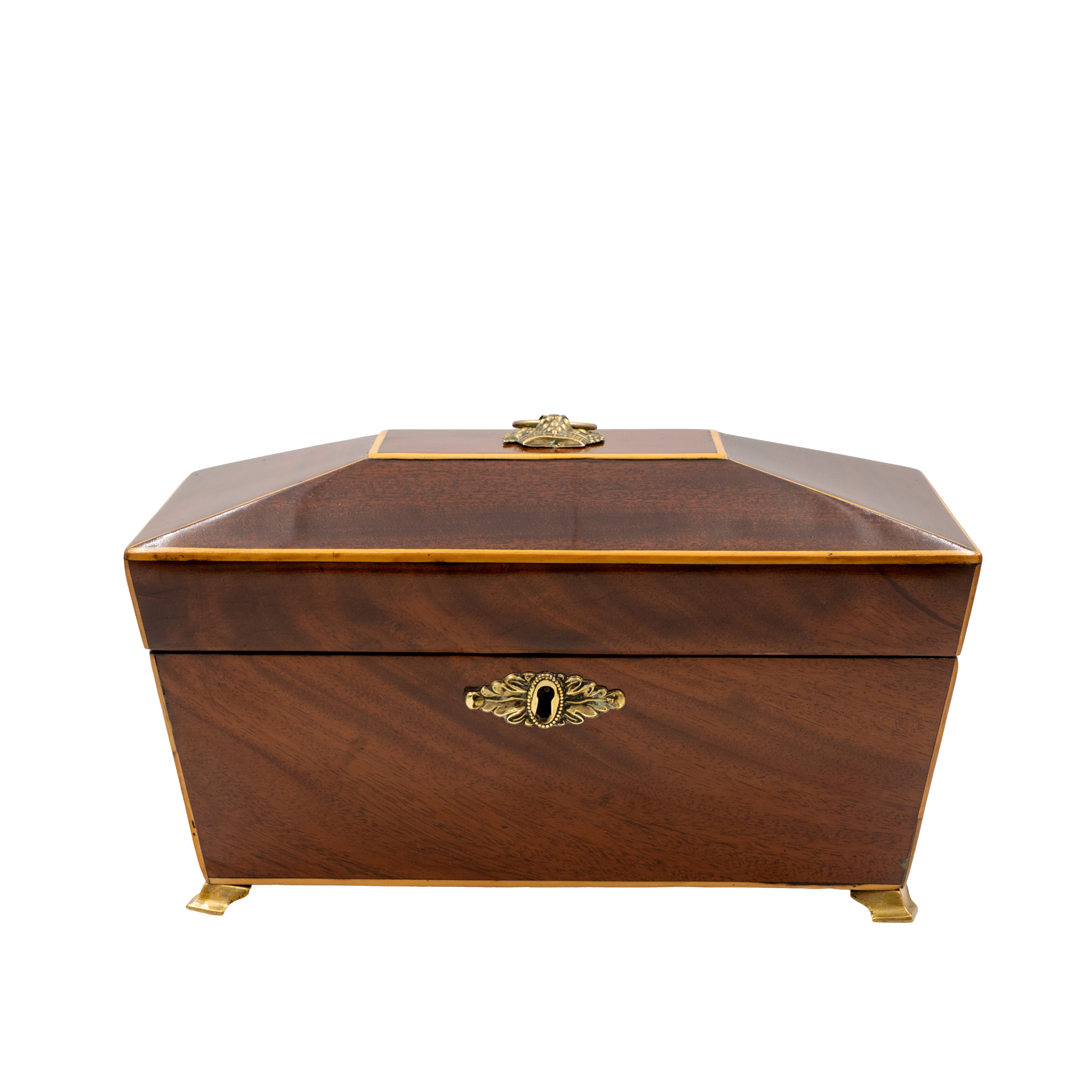
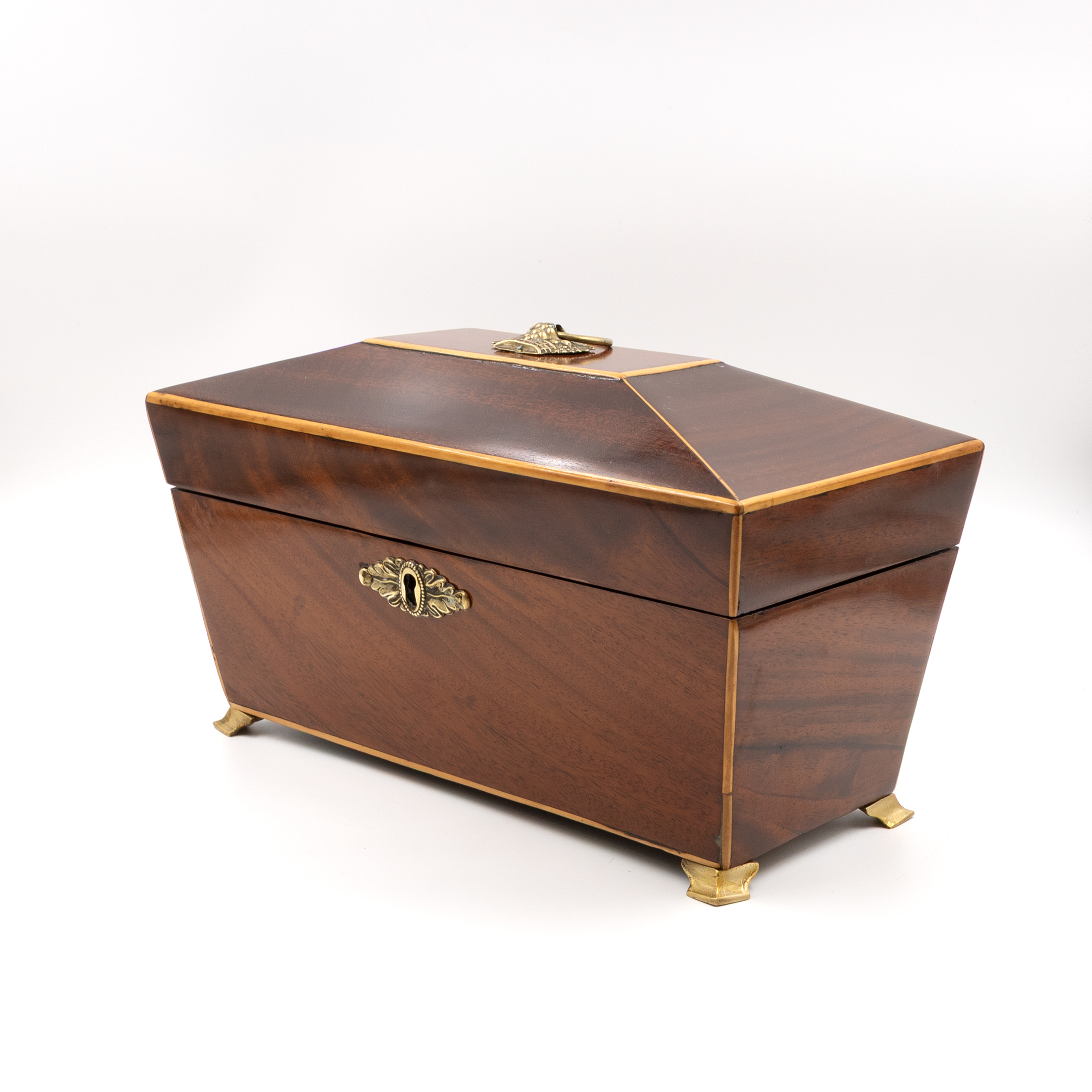
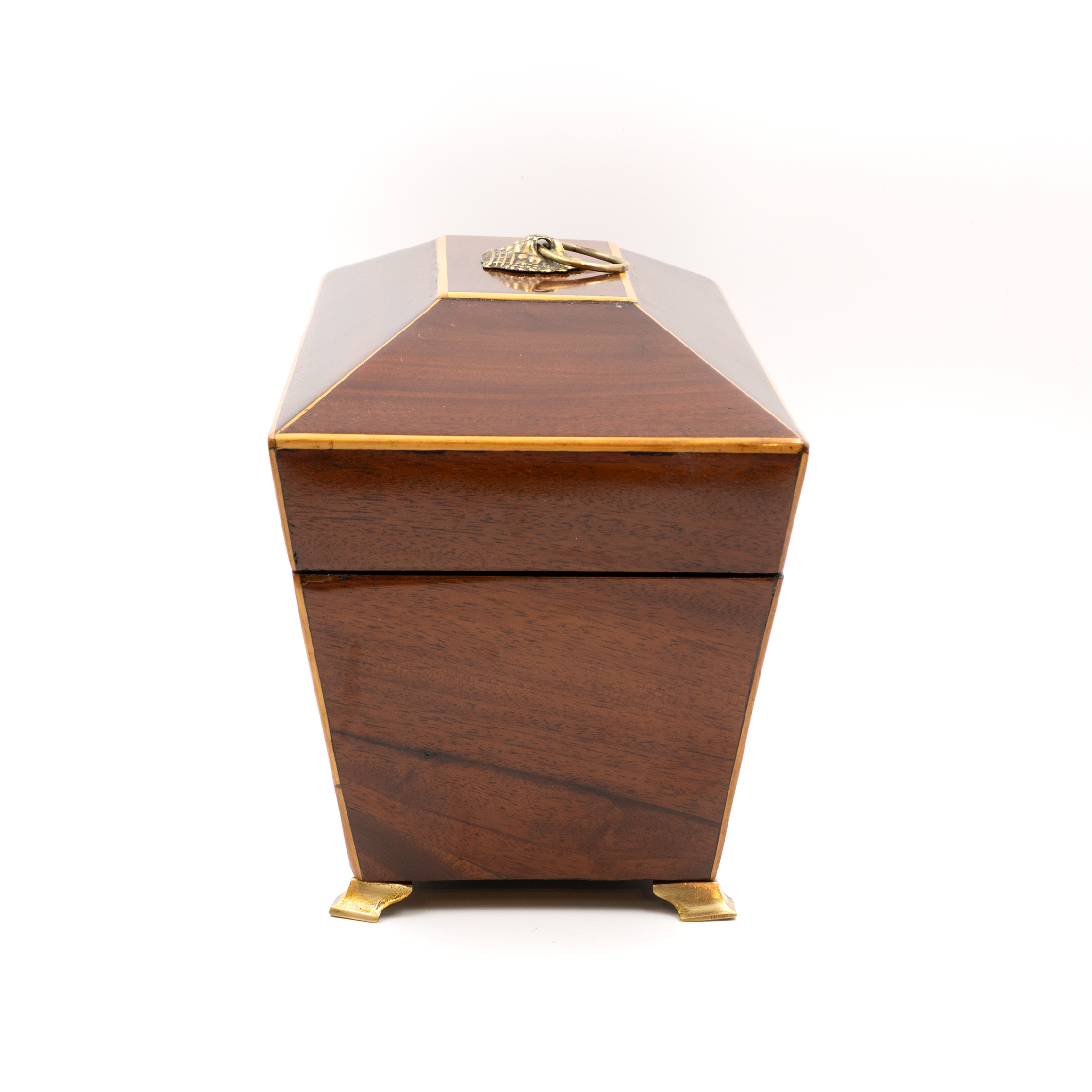
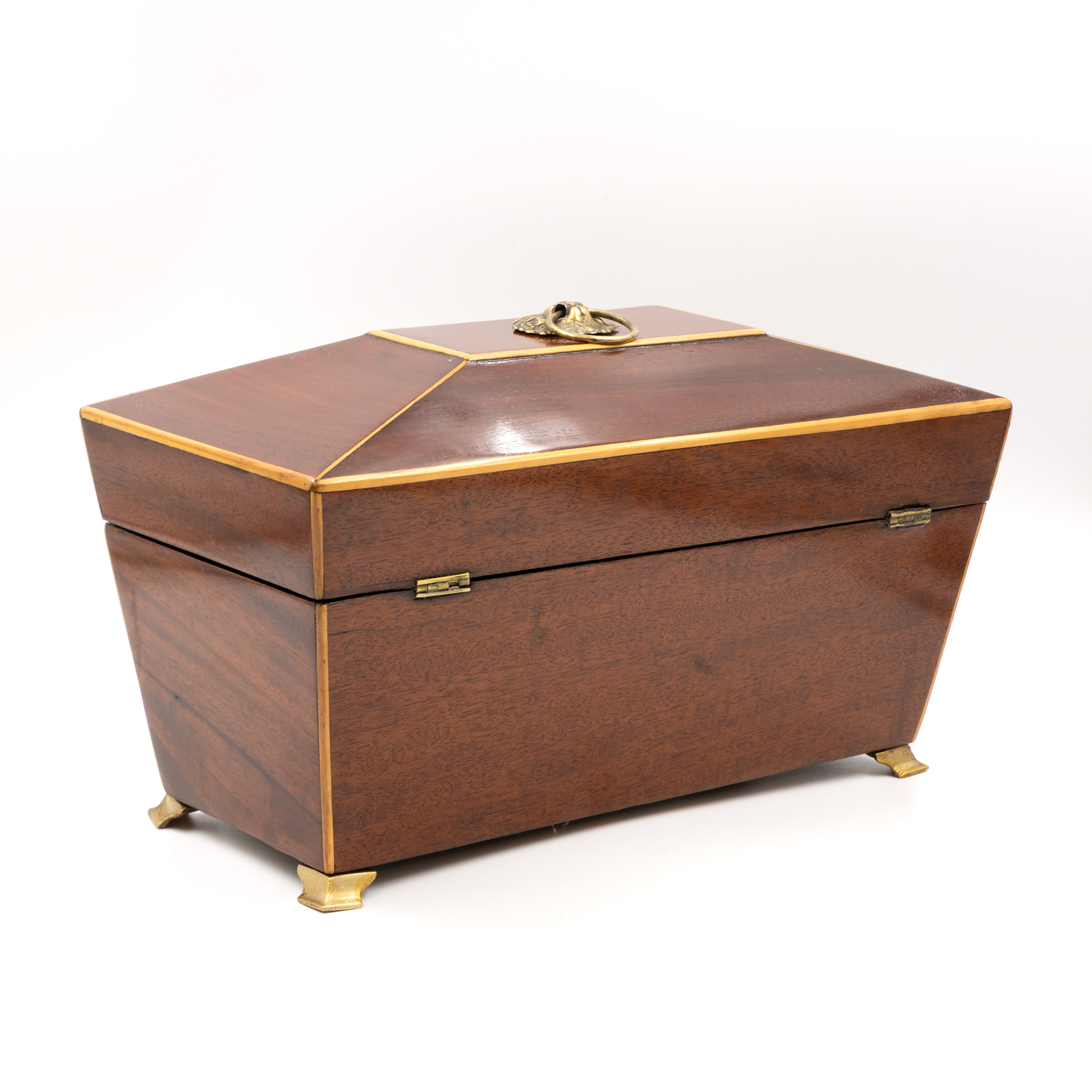
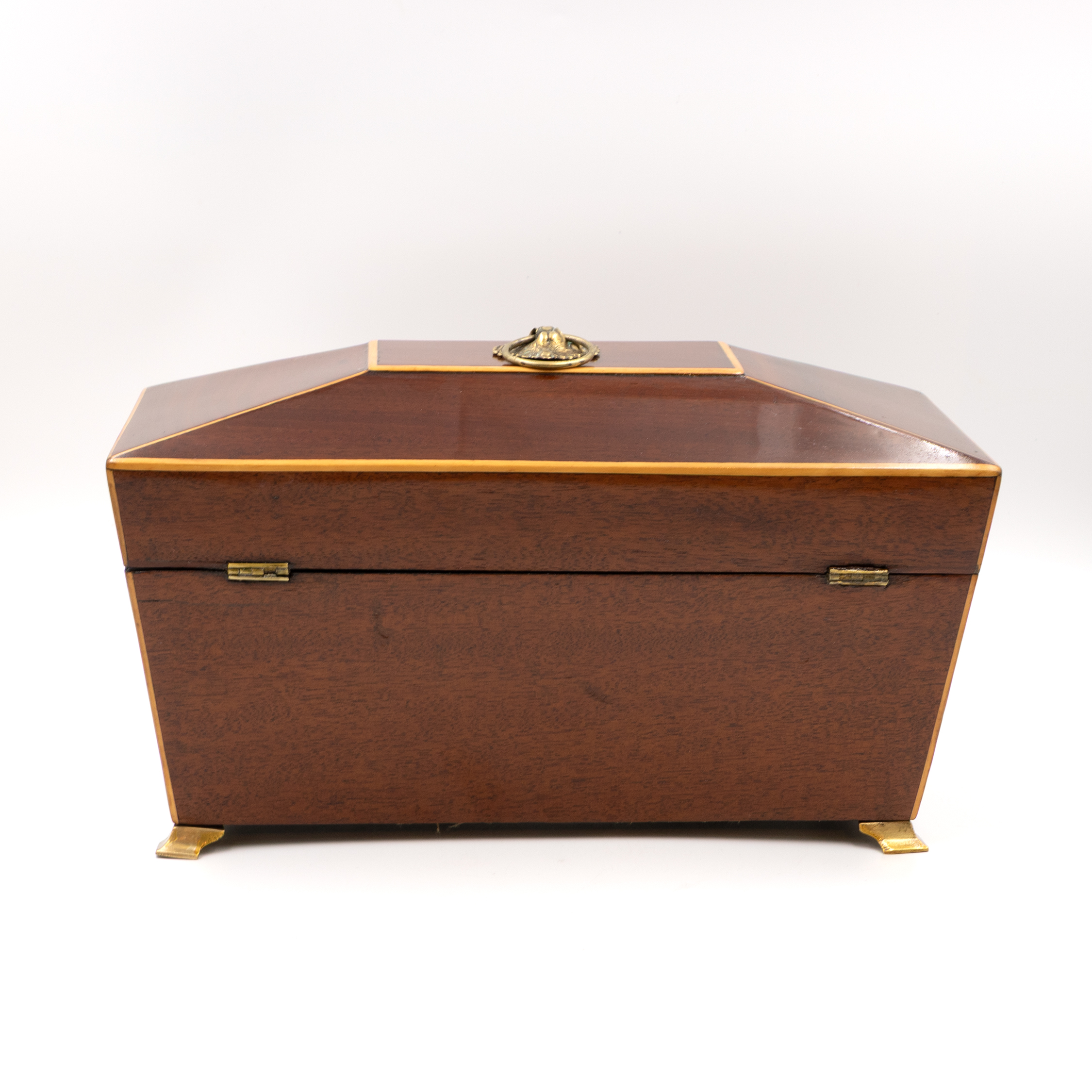
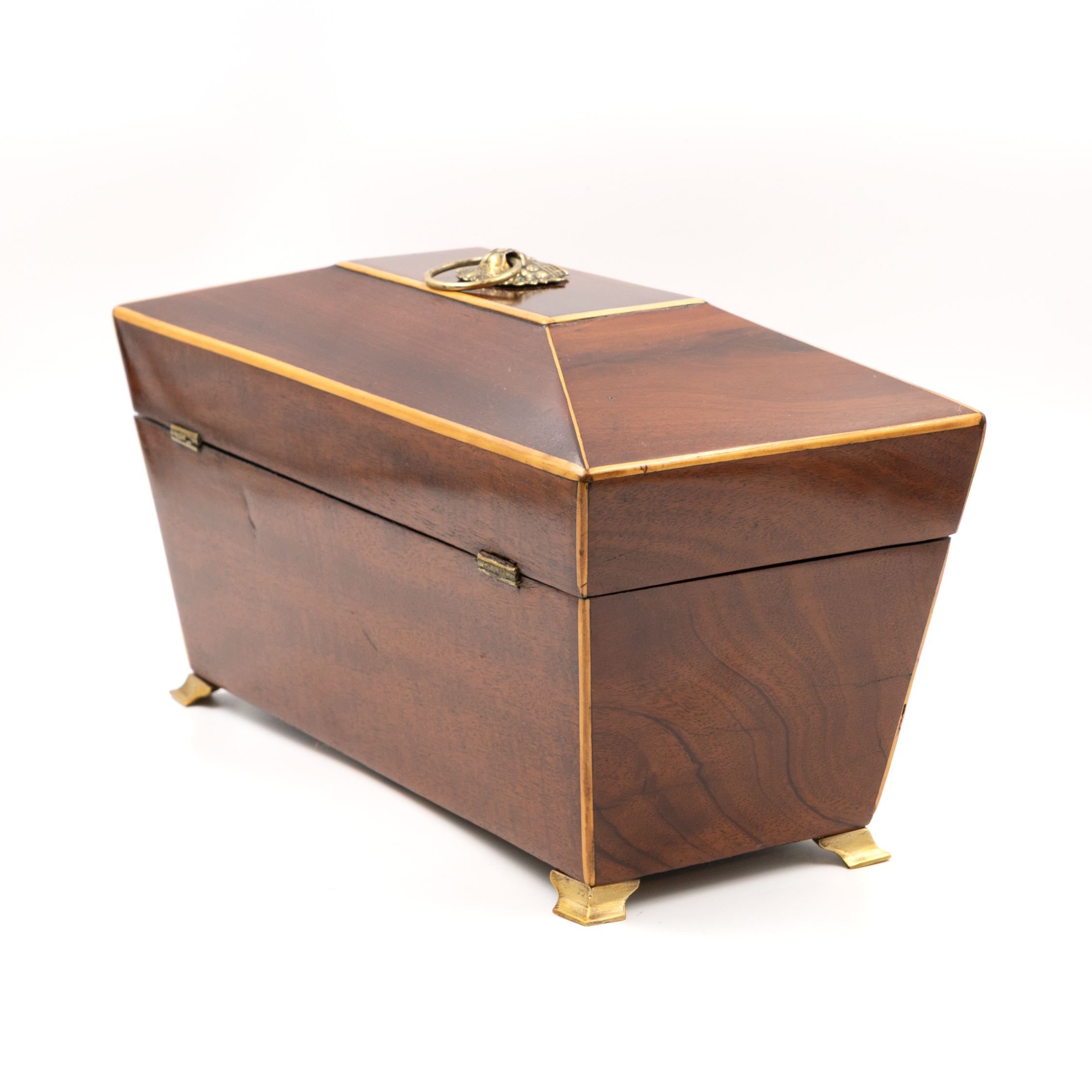
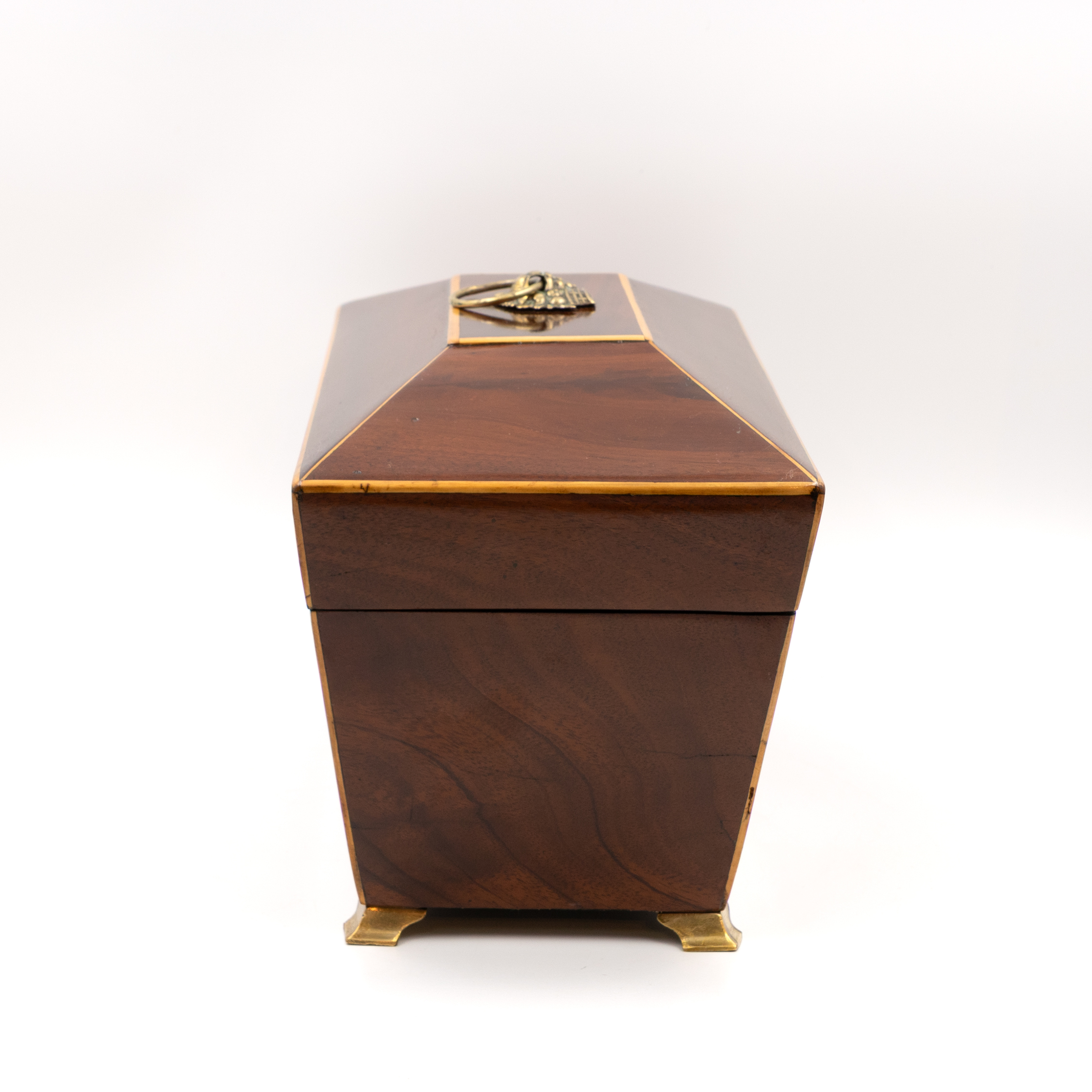
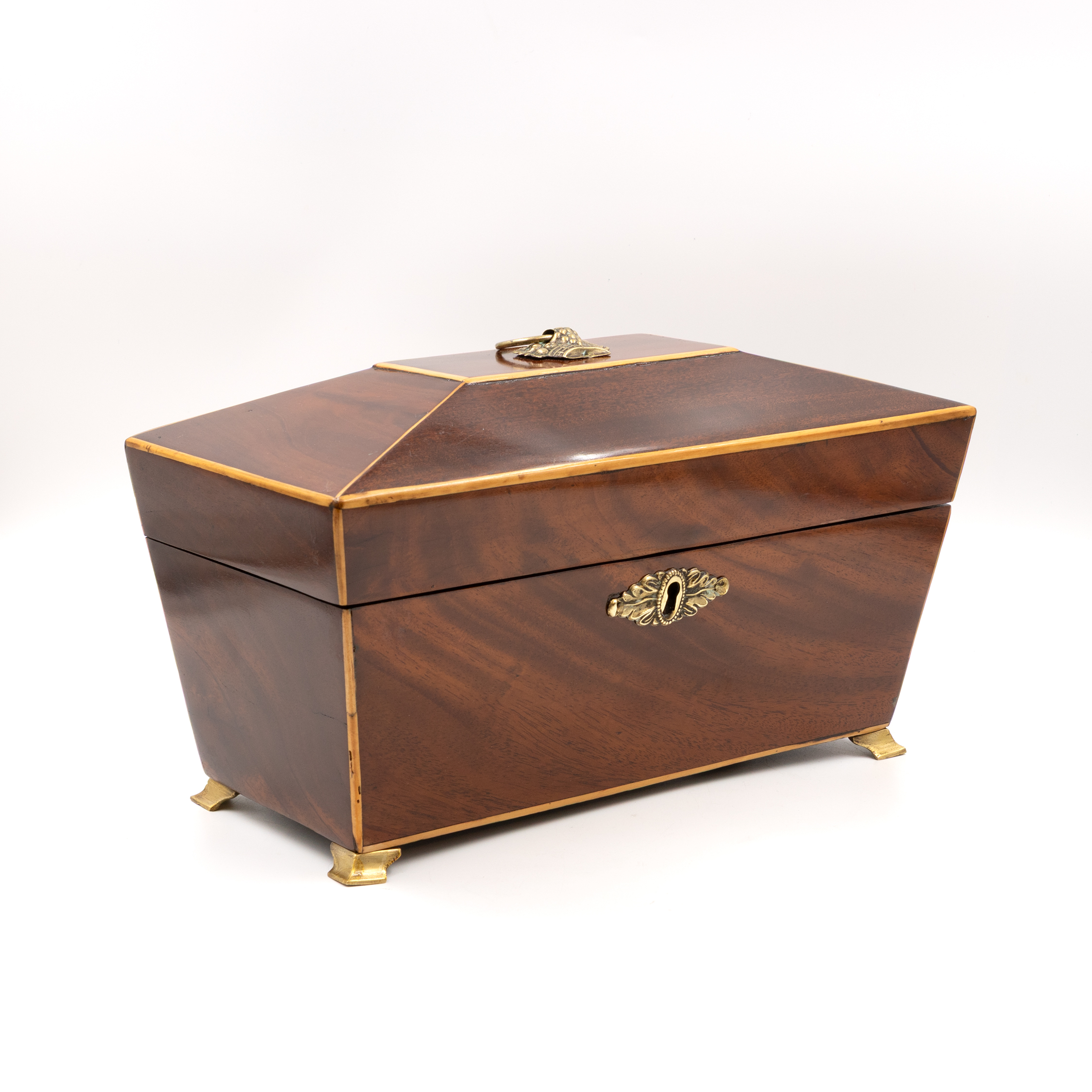
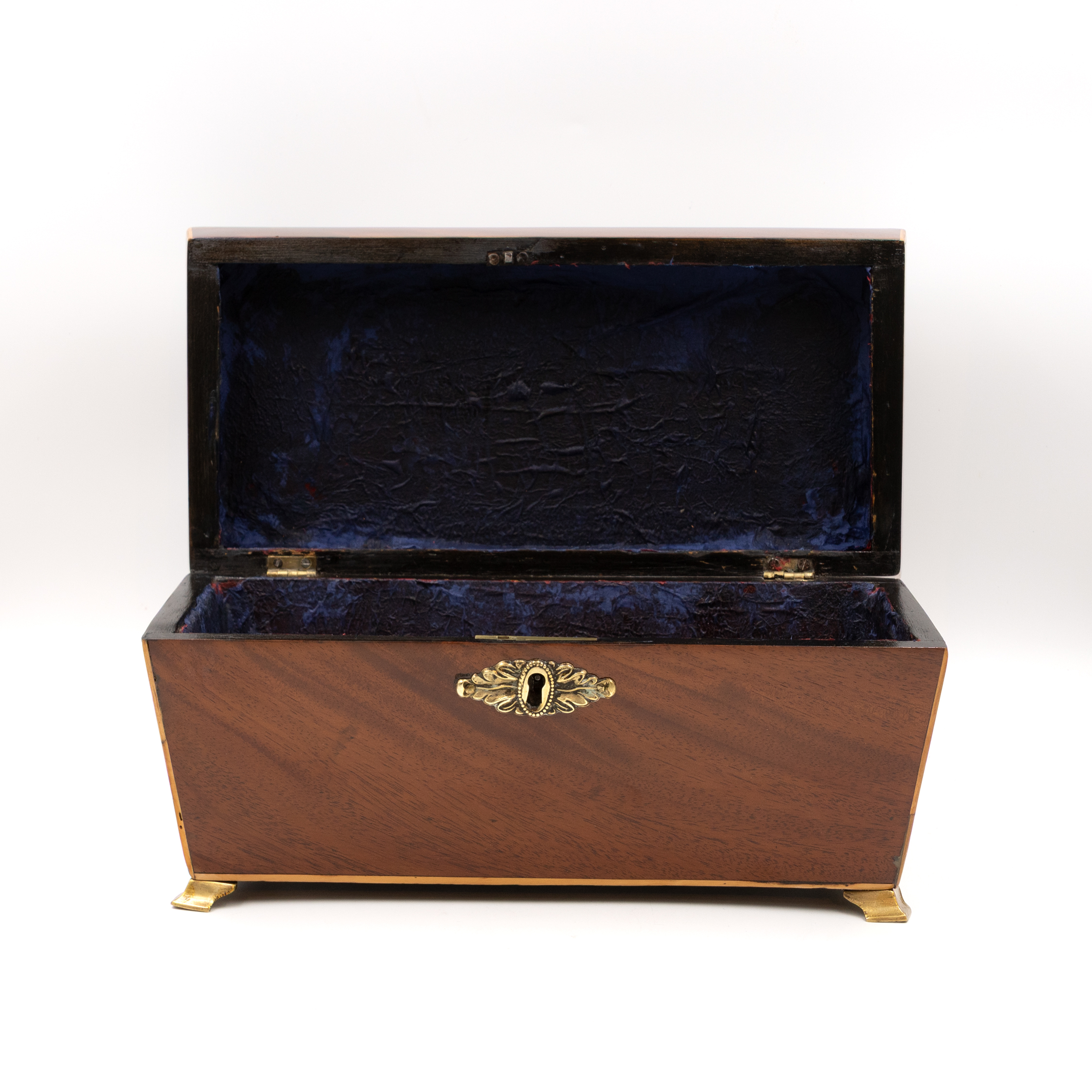
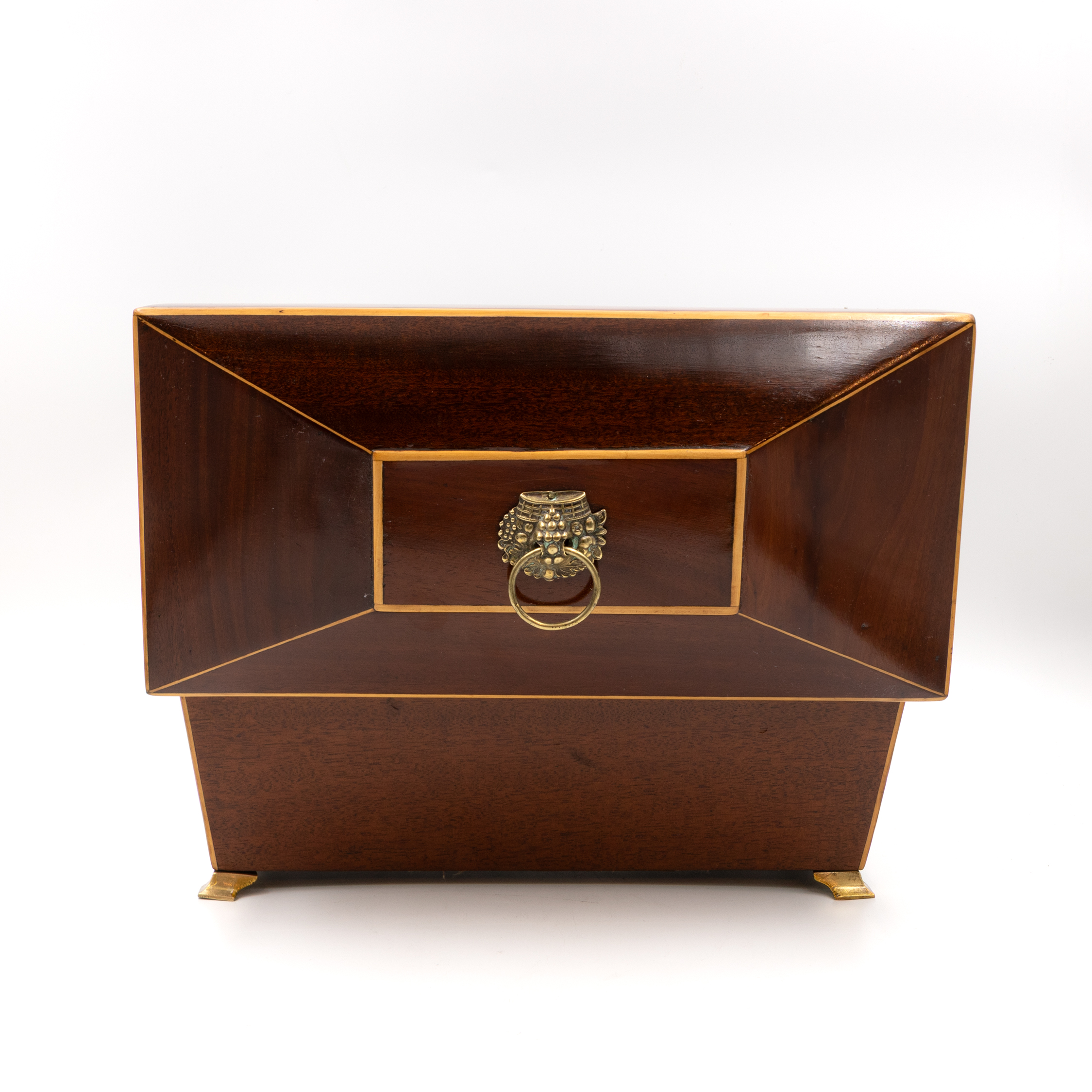
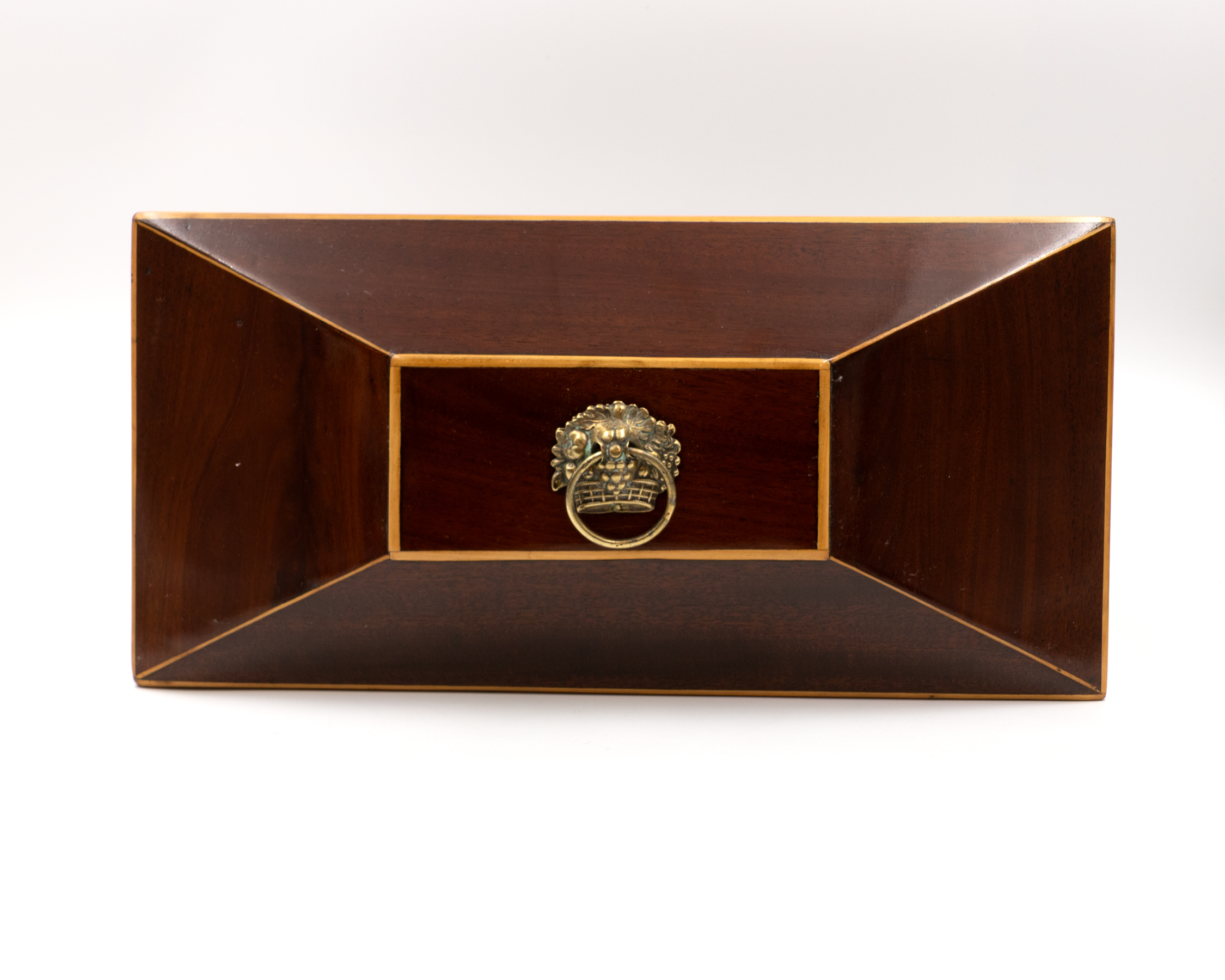
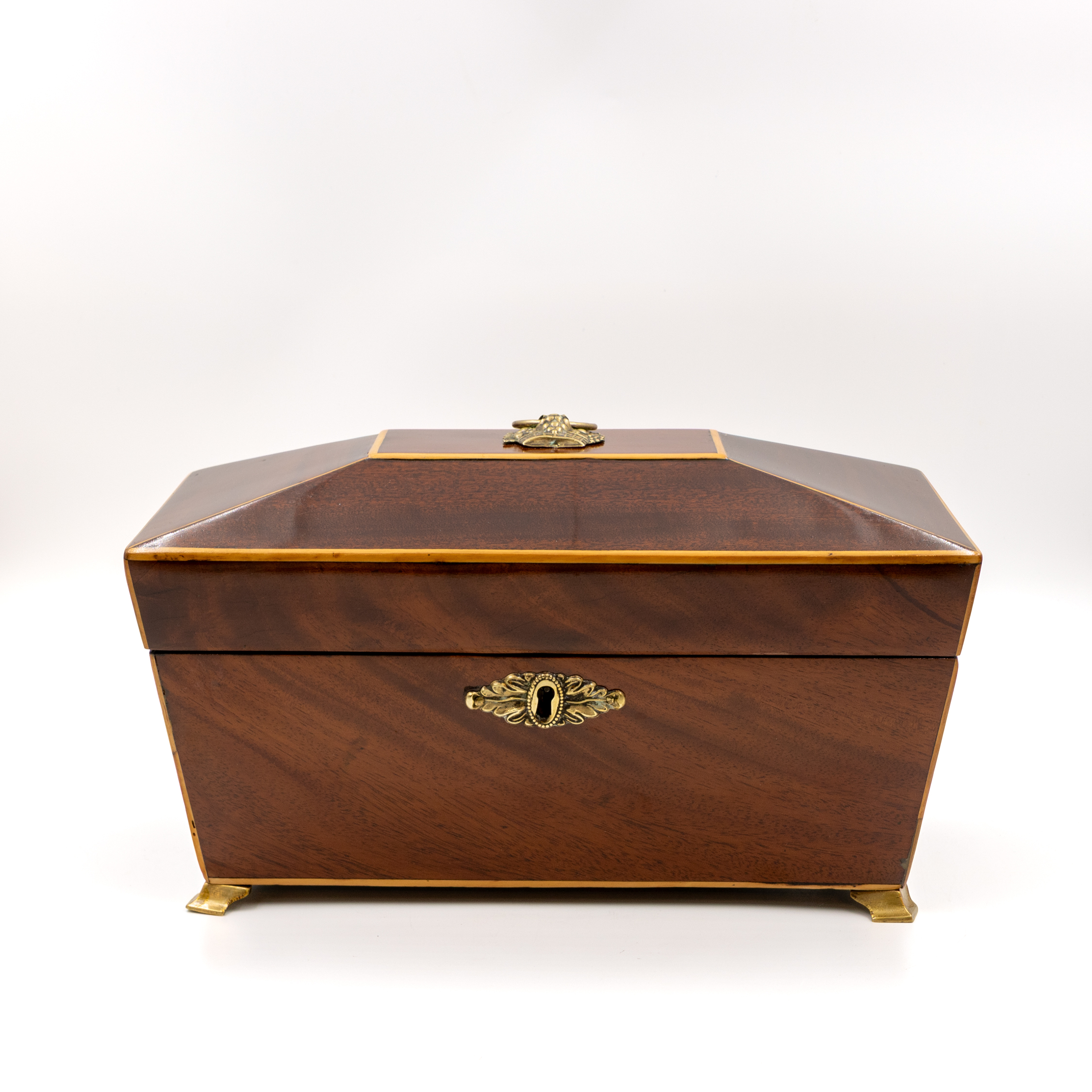
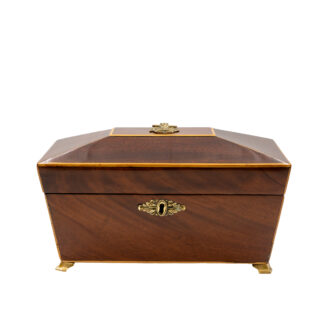
An English Regency mahogany box of tapered rectangular form with a pyramidal lid outlined in satinwood stringing. The lid centered by a brass basket-form ring handle, opening to a blue-lined interior. Raised on brass bracket feet with a brass foliate escutcheon to the front. The satinwood edging emphasizes the geometric form of the box and contrasts with the figured mahogany veneers throughout. Regency, English, circa 1820. 1
Height: 7 in. (18 cm.)
Width: 12 in. (30 cm.)
Depth: 6 in. (15 cm.)
Further readings and sources:
- Boxes of this general form became popular in England during the Regency period. Their tapering sides and canted lids reflect the classical and Egyptian Revival tastes that were influential in English decorative arts during the early nineteenth century. Publications such as Thomas Hope’s Household Furniture and Interior Decoration (1807) introduced these design ideas to English cabinetmakers and their clients. The use of contrasting satinwood stringing against mahogany veneers is characteristic of Regency decorative practice, providing geometric definition while maintaining a restrained neoclassical appearance.
- Thomas Hope, Household Furniture and Interior Decoration (London, 1807).
- Dominique Vivant Denon, Voyage dans la Basse et la Haute Égypte (Paris, 1802).
- Victoria and Albert Museum, London. Collections and research resources relating to Regency furniture, tea caddies, writing boxes, and Egyptian Revival design.
Reviews
There are no reviews yet.