

Description
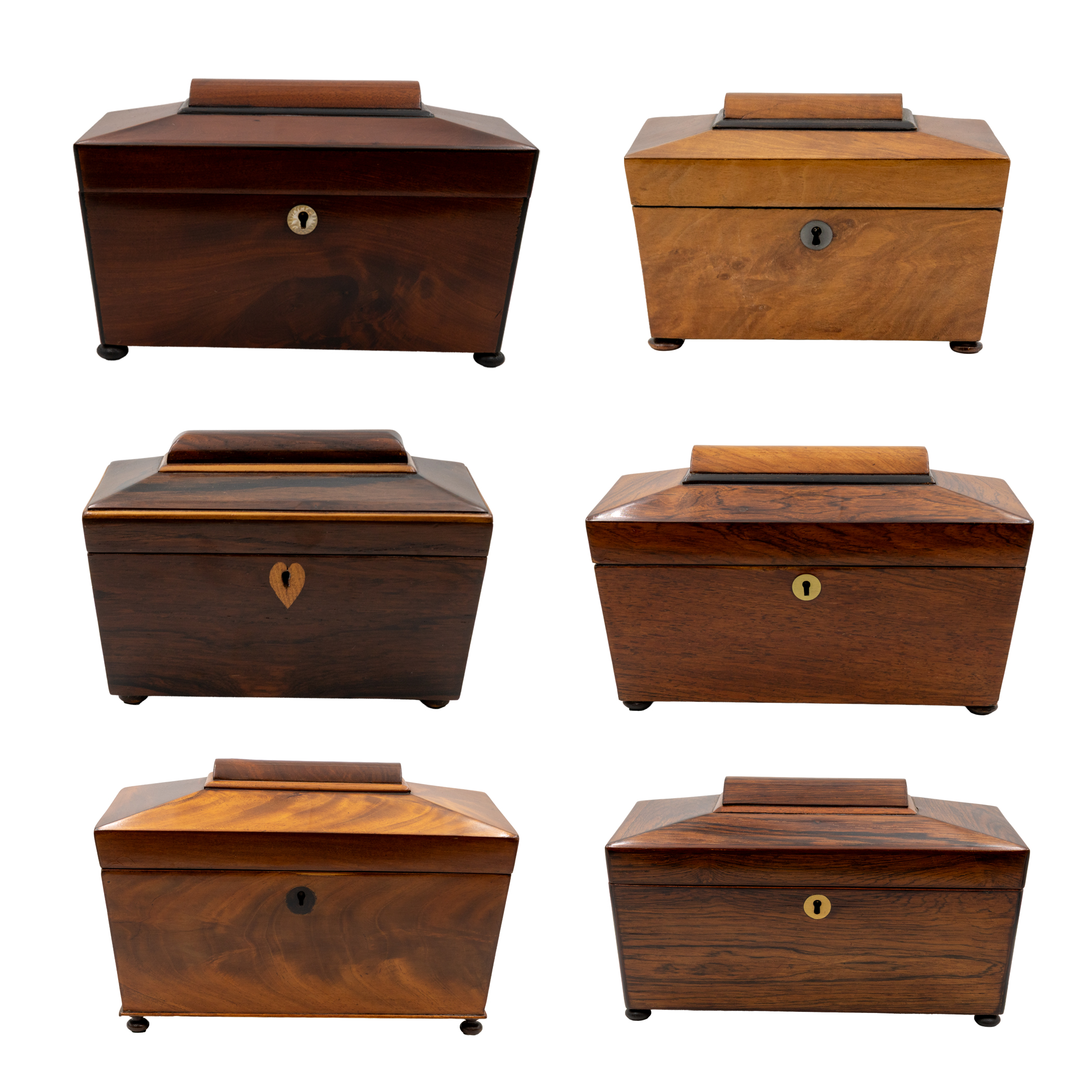
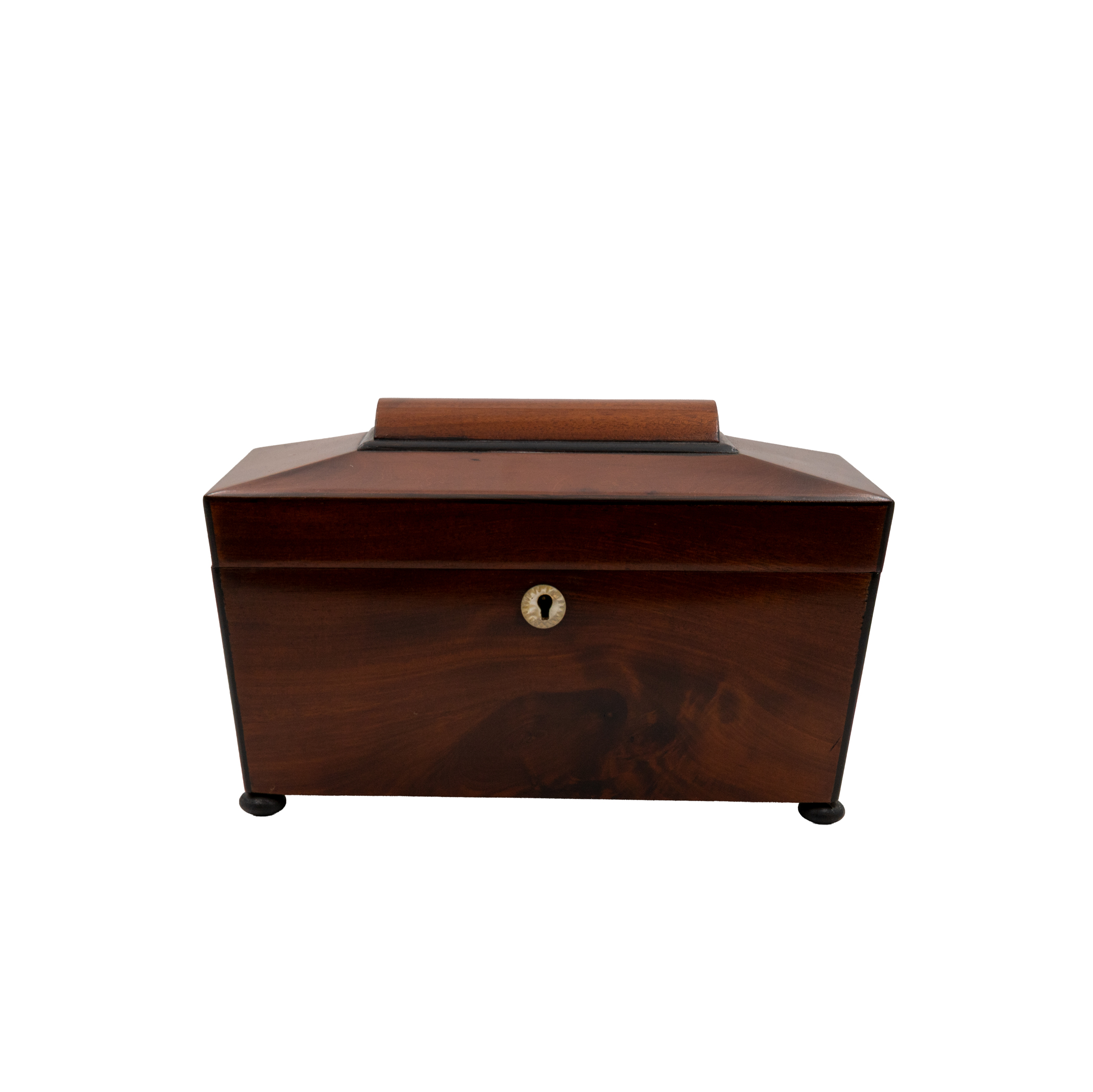
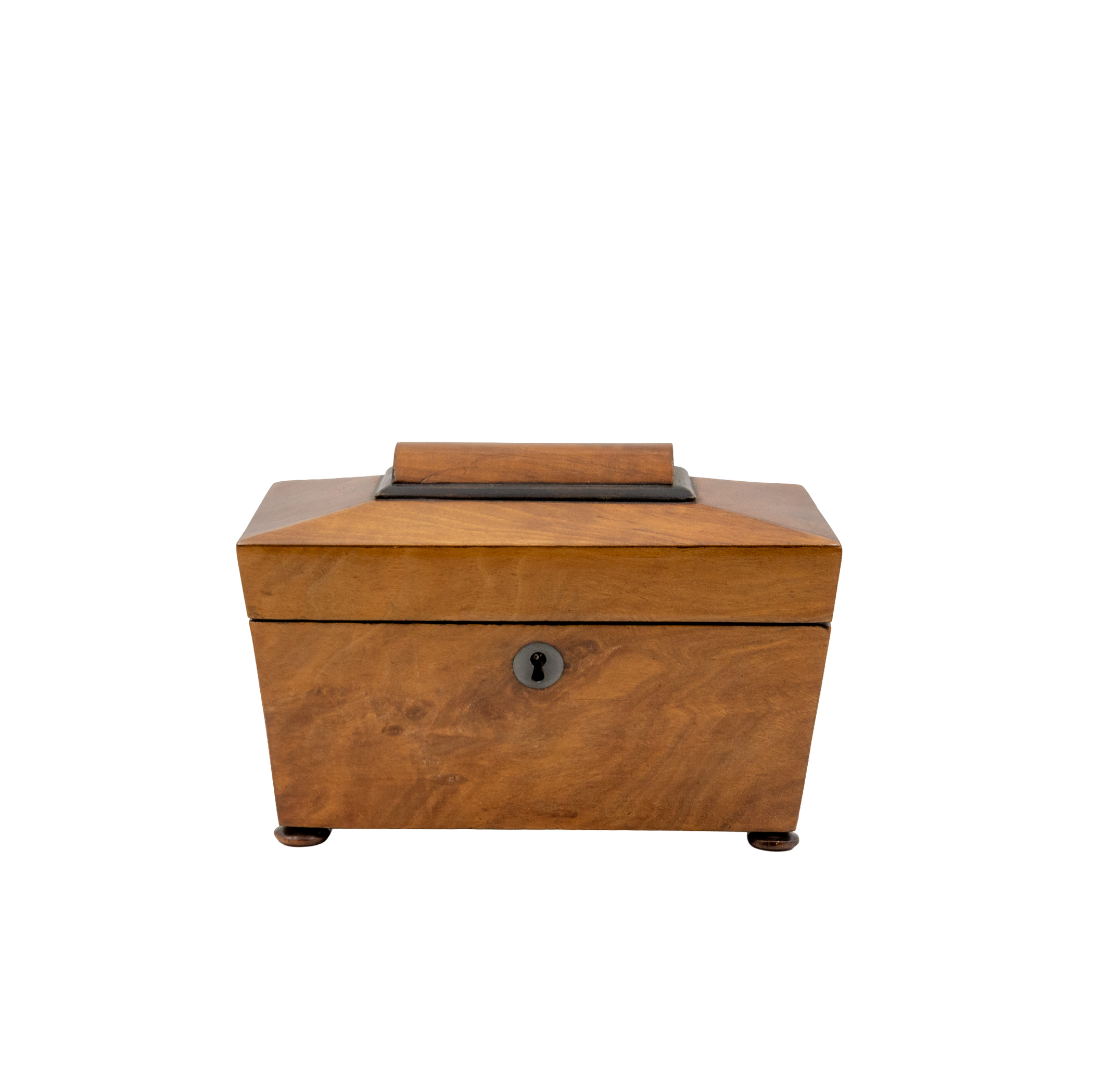
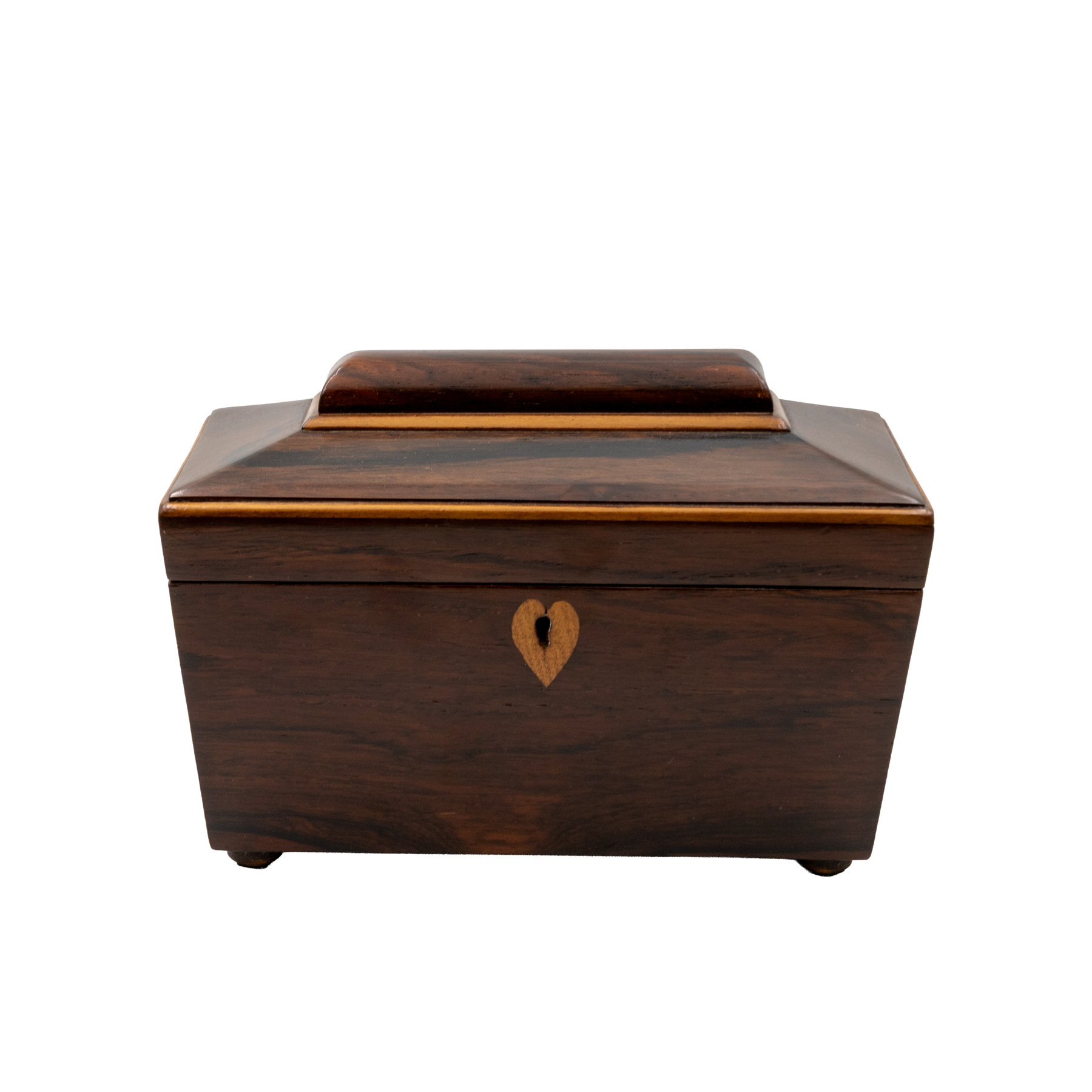
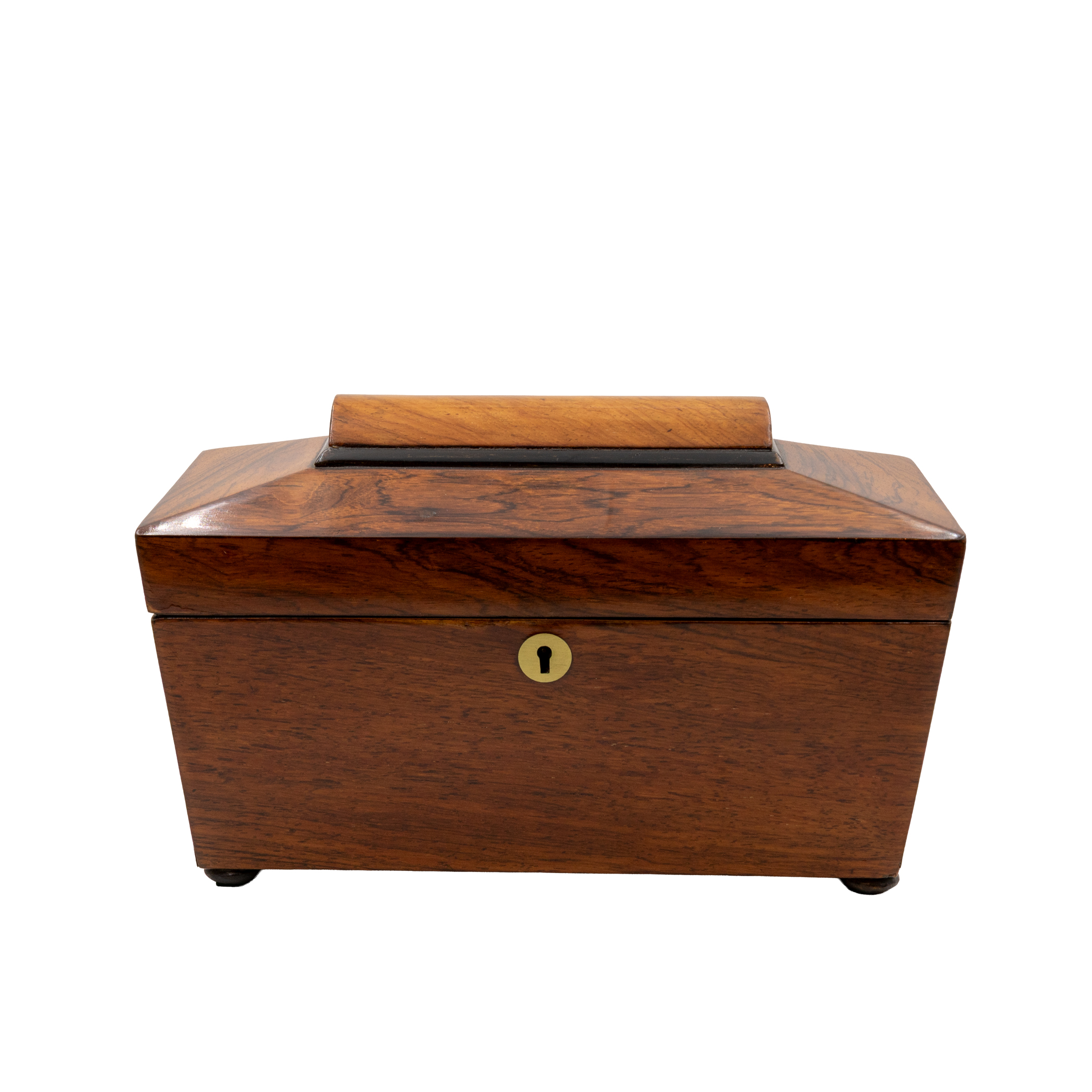
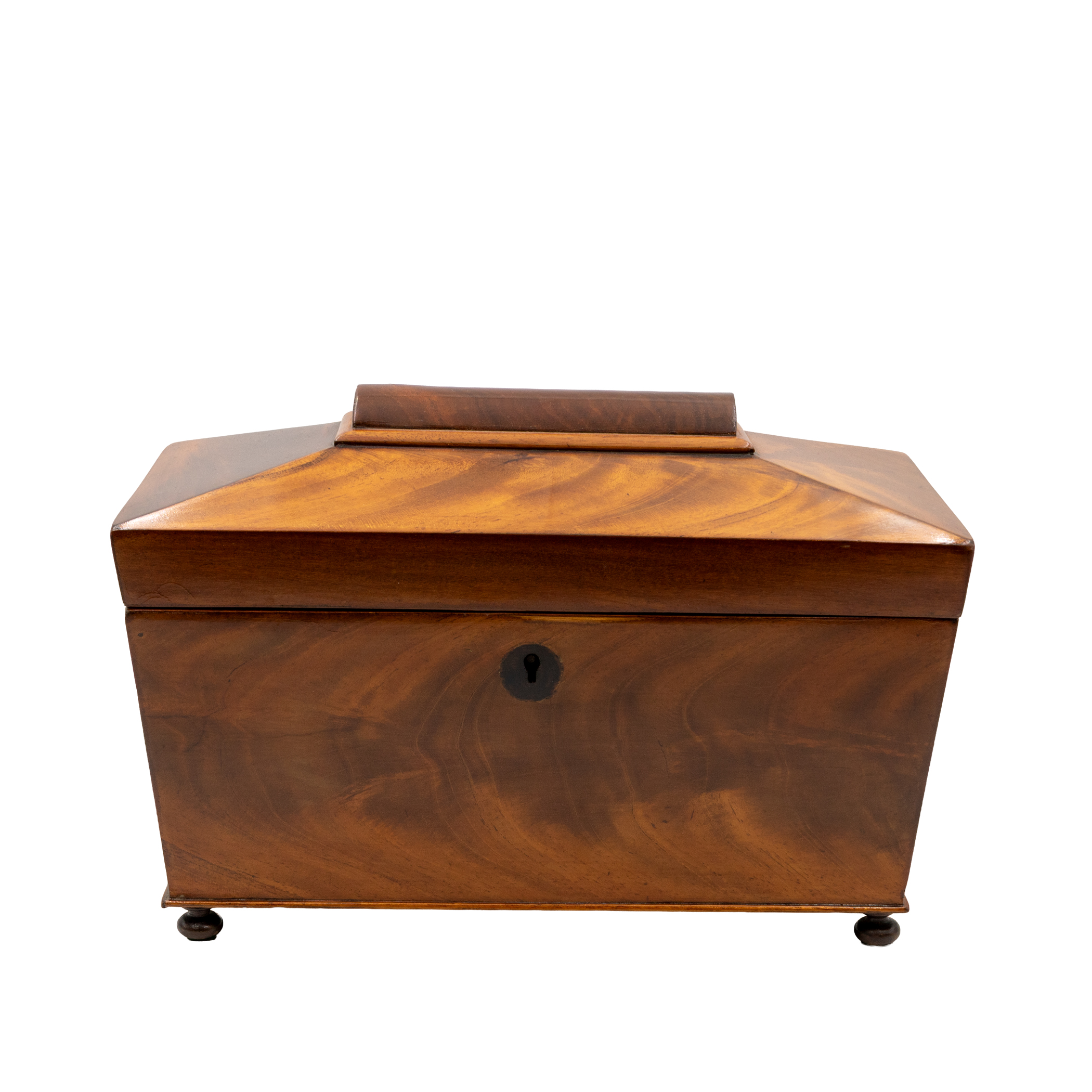
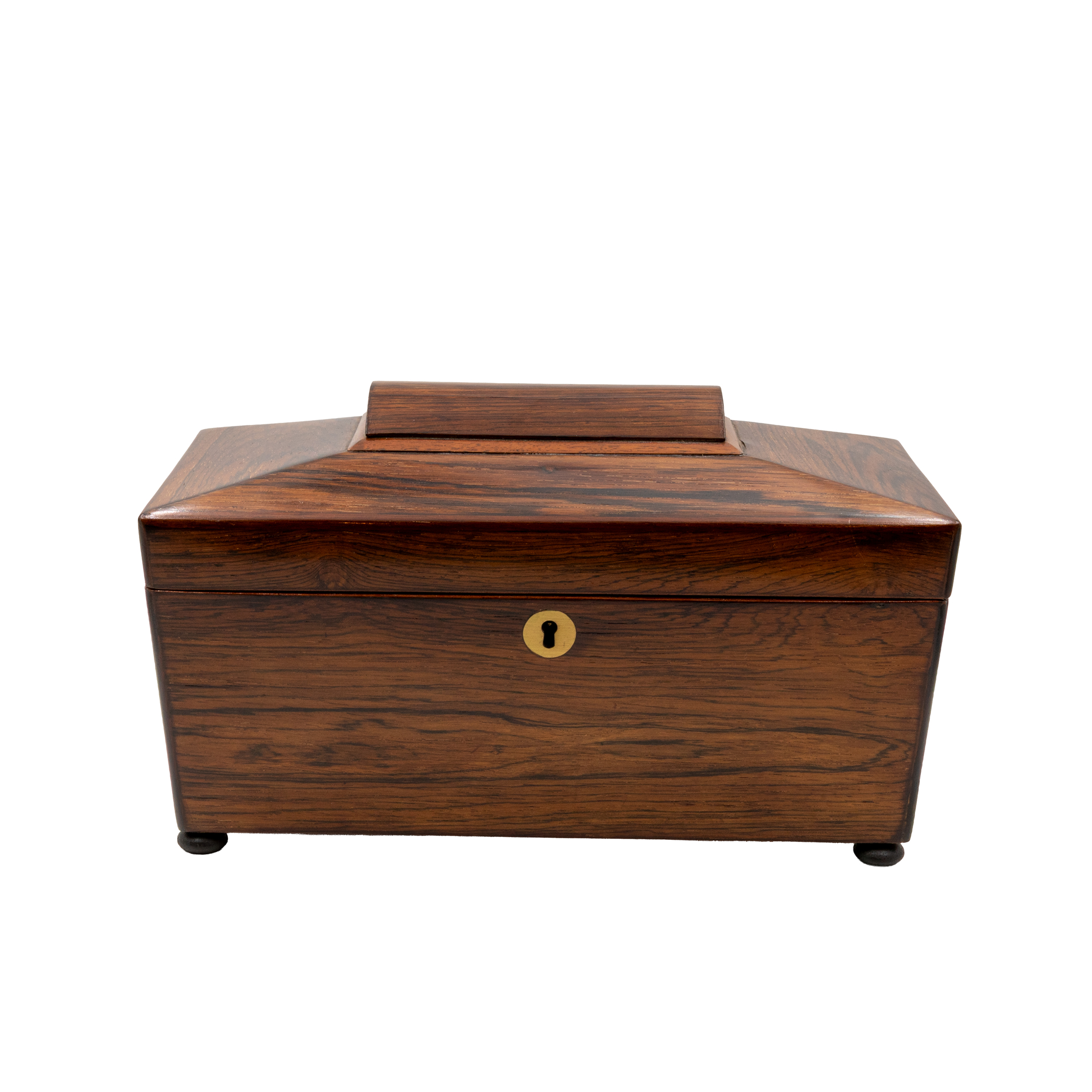
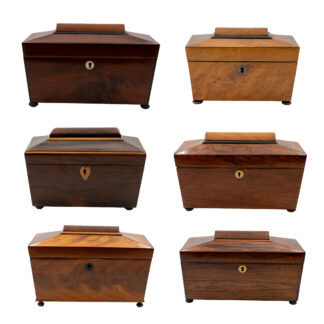
A collection of six early English boxes of sarcophagus form 1, circa 1840–1850, each in a different figured or exotic wood: two in flame mahogany, two in rosewood, one in burr walnut, and one in coromandel. Each box rises on four turned bun feet and presents a moulded, hinged lid surmounted by a shaped central handle. Five boxes carry round escutcheons — three in brass, two in ebonized wood or darkened metal — and one in coromandel carries a heart-shaped wood inlay escutcheon. Working locks and keys on all six. The hand-applied French polish throughout brings out the full figuring and depth of color in each wood. Early Victorian, Circa 1840–1850. Sold as a collection.
Largest Box:
Height: 8.5 in. (22 cm.)
Width: 12 in. (30 cm.)
Depth: 6 in. (15 cm.)
Smallest Box:
Height: 5.5 in. (14 cm.)
Width: 8 in. (20 cm.)
Depth: 4.5 in. (11 cm.)
Further readings and sources:
- A note on the form: The sarcophagus-form box with hinged moulded lid and central handle was a prevalent English cabinet-maker’s form in the early Victorian period, associated with tea caddies and work boxes of the 1830s–1850s. The use of highly figured veneers — flame mahogany, burr walnut, coromandel, and rosewood — reflects the period taste for exotic and richly grained timbers, imported in quantity from the Caribbean, South America, and South and Southeast Asia. ↩
Reviews
There are no reviews yet.