


Description
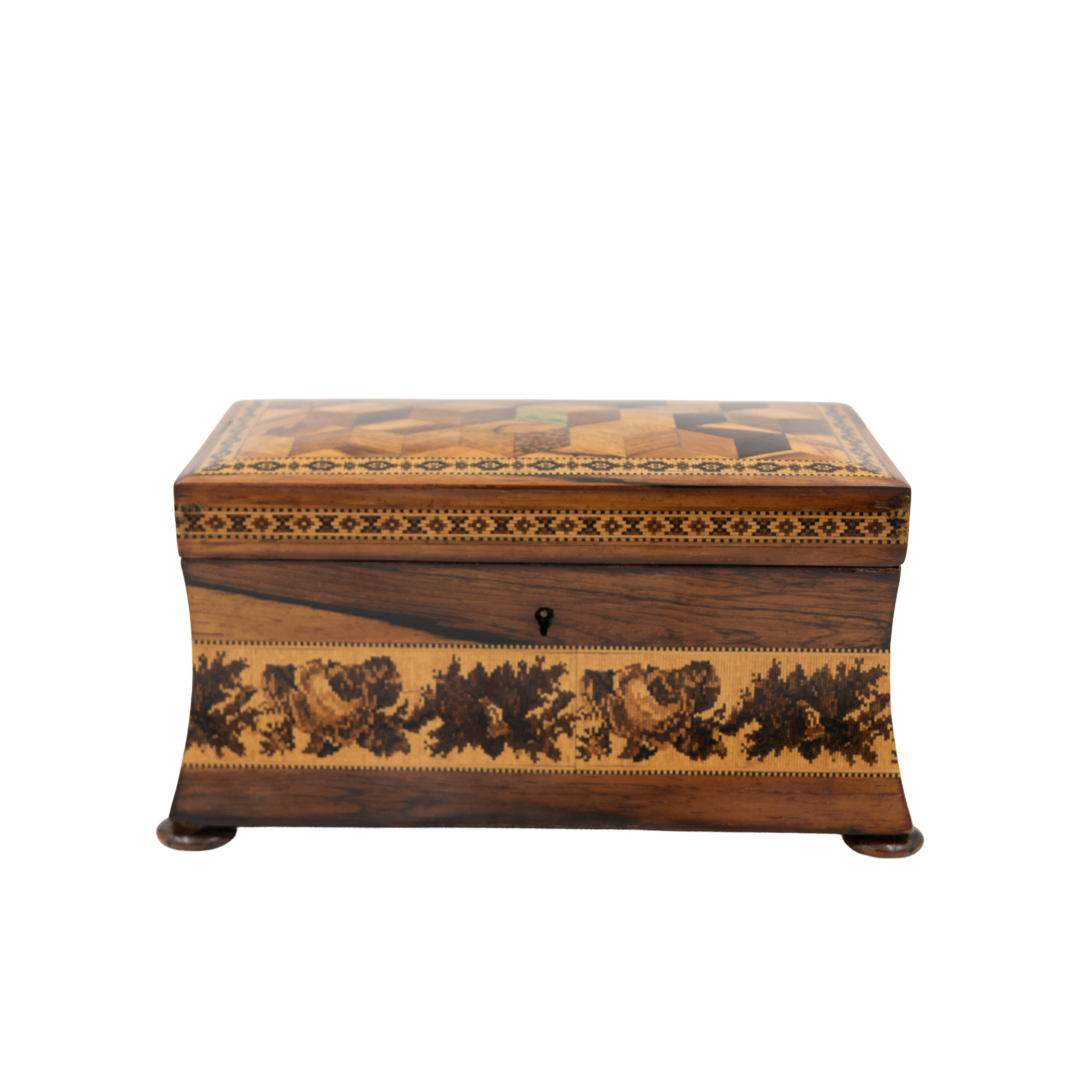
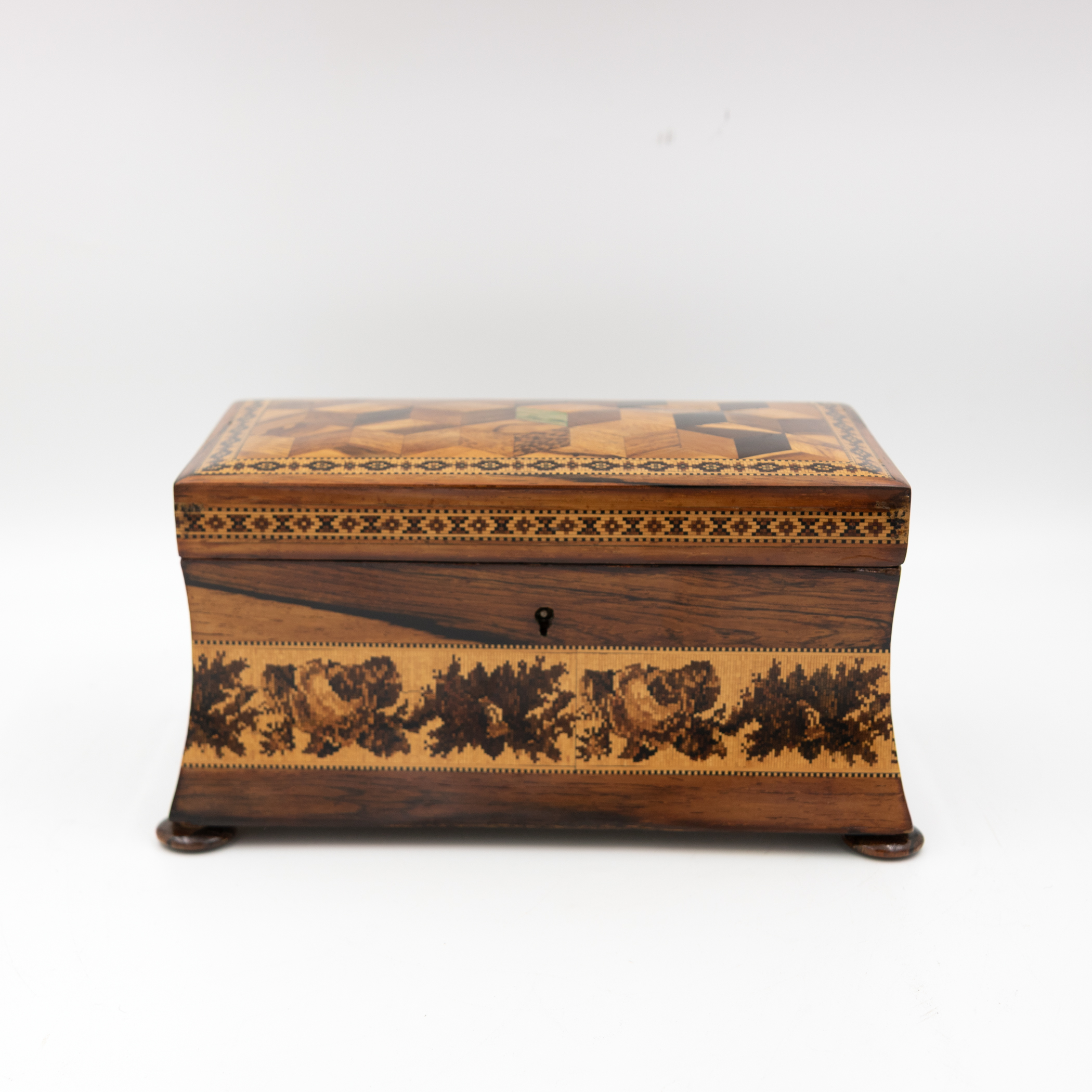
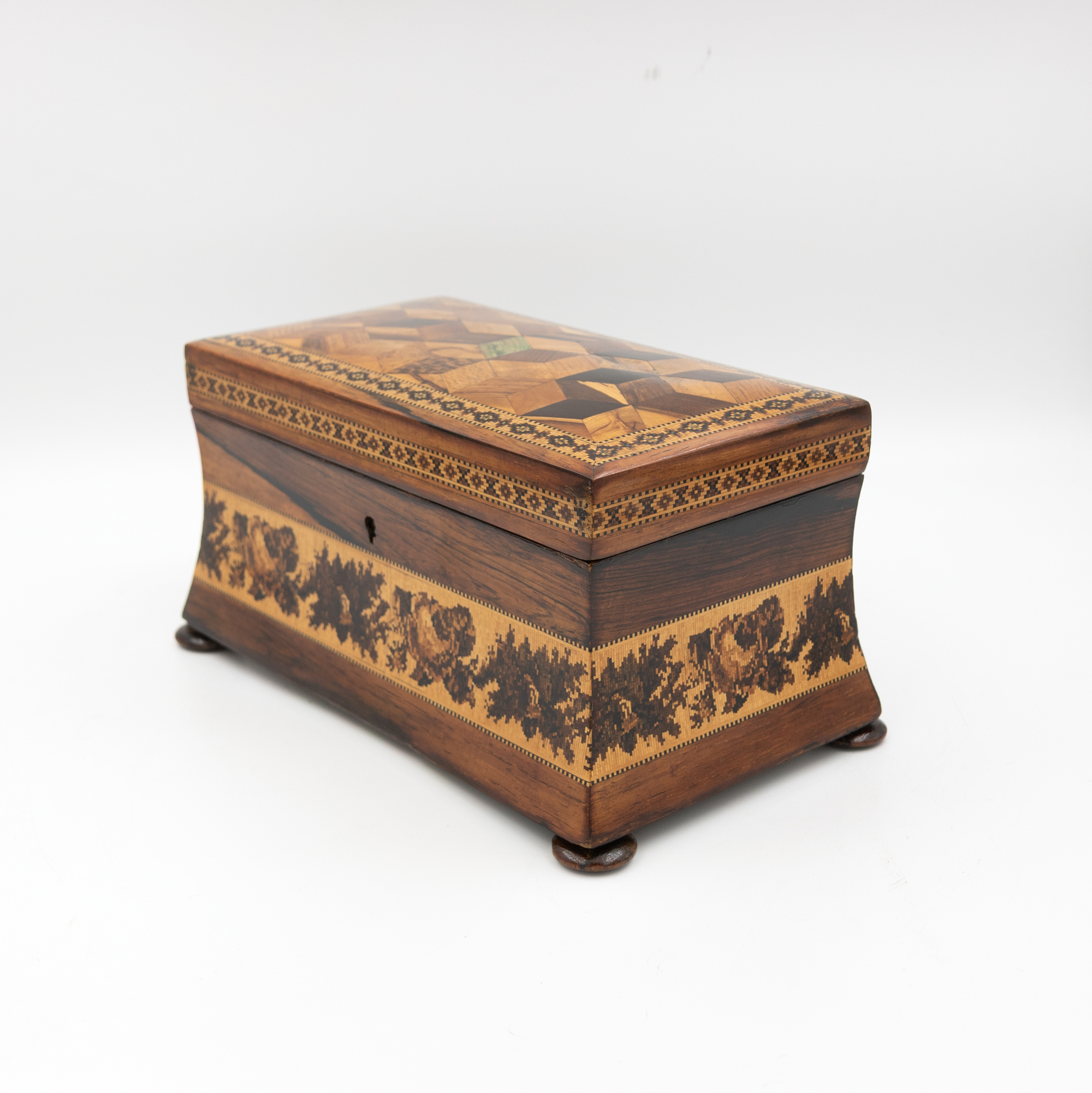
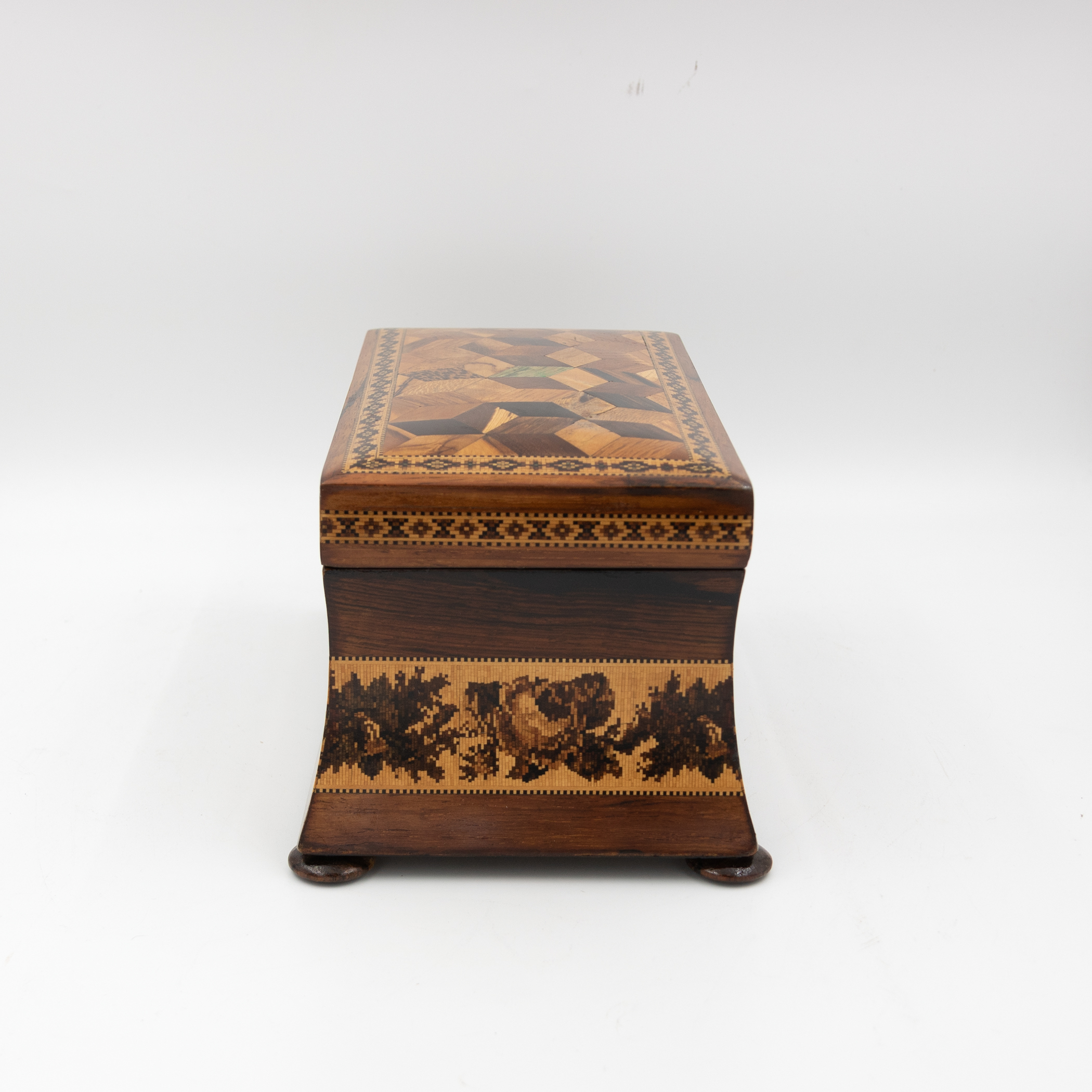
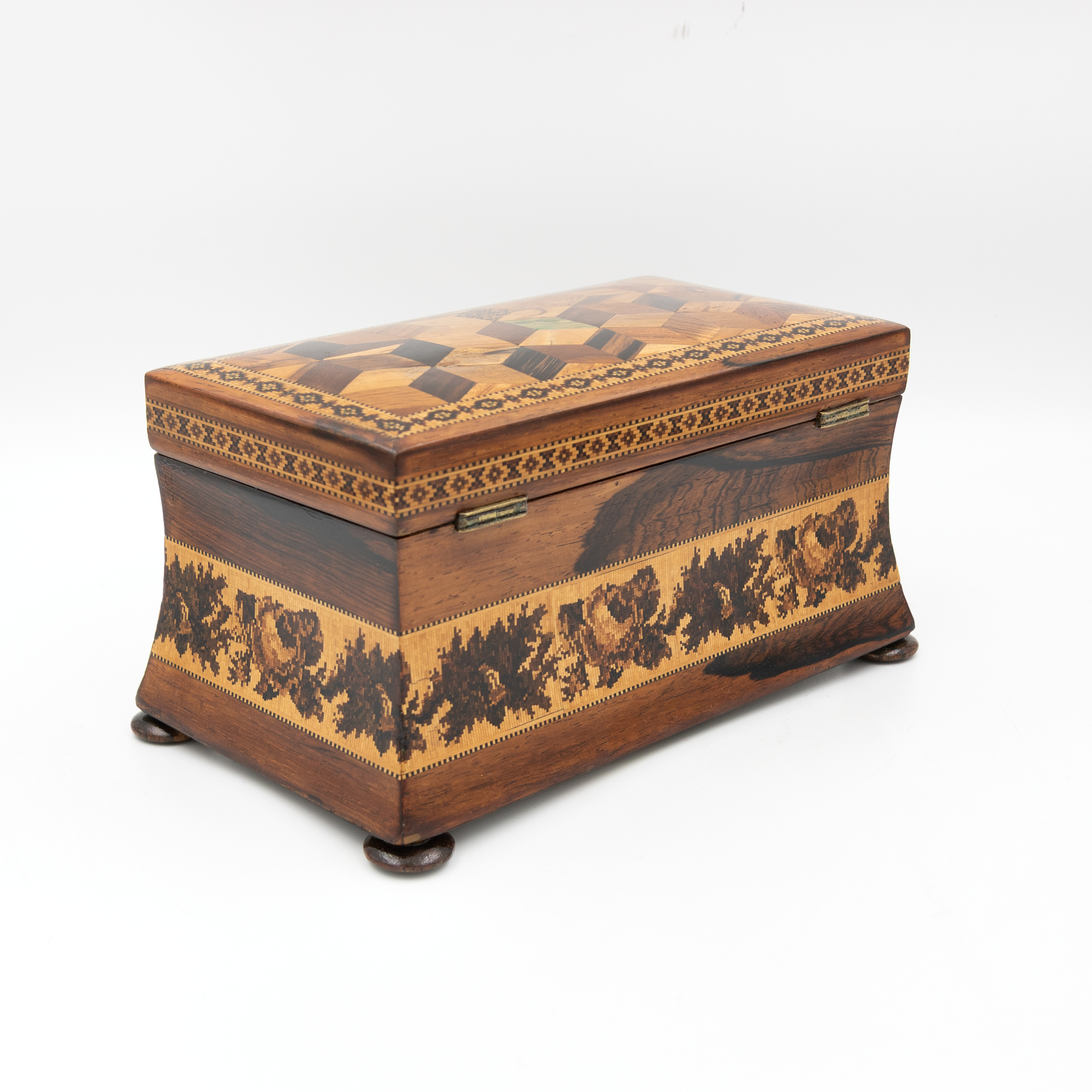
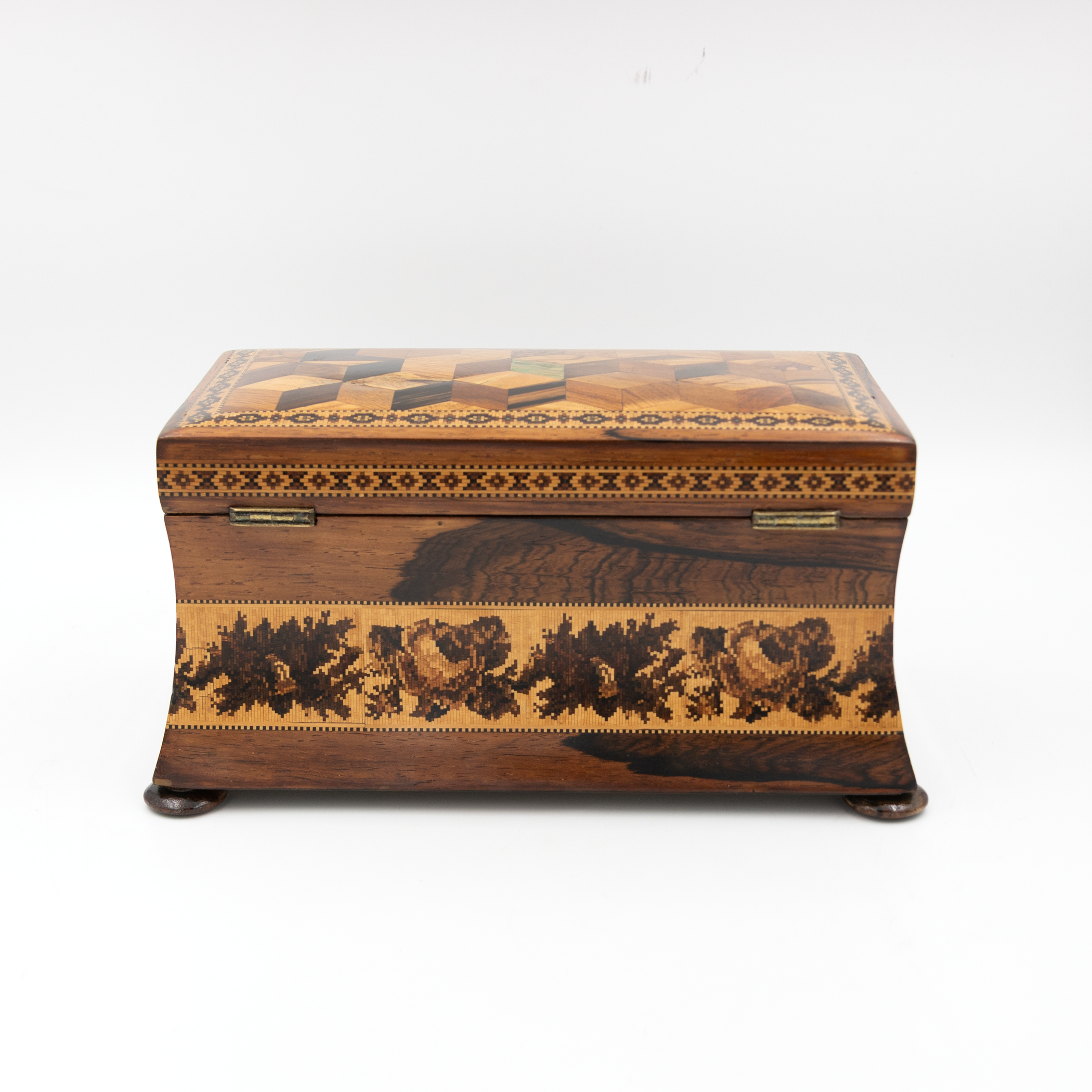
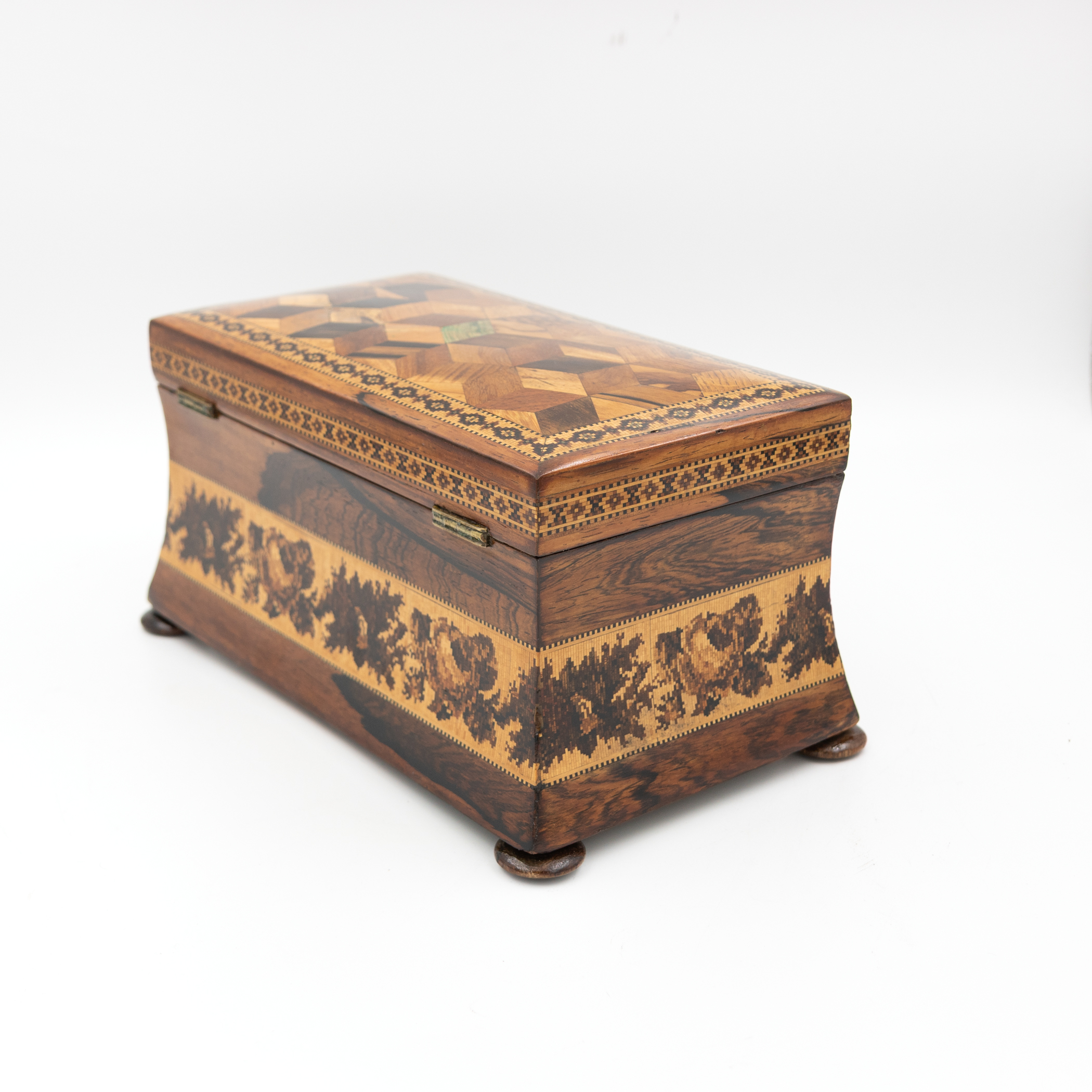
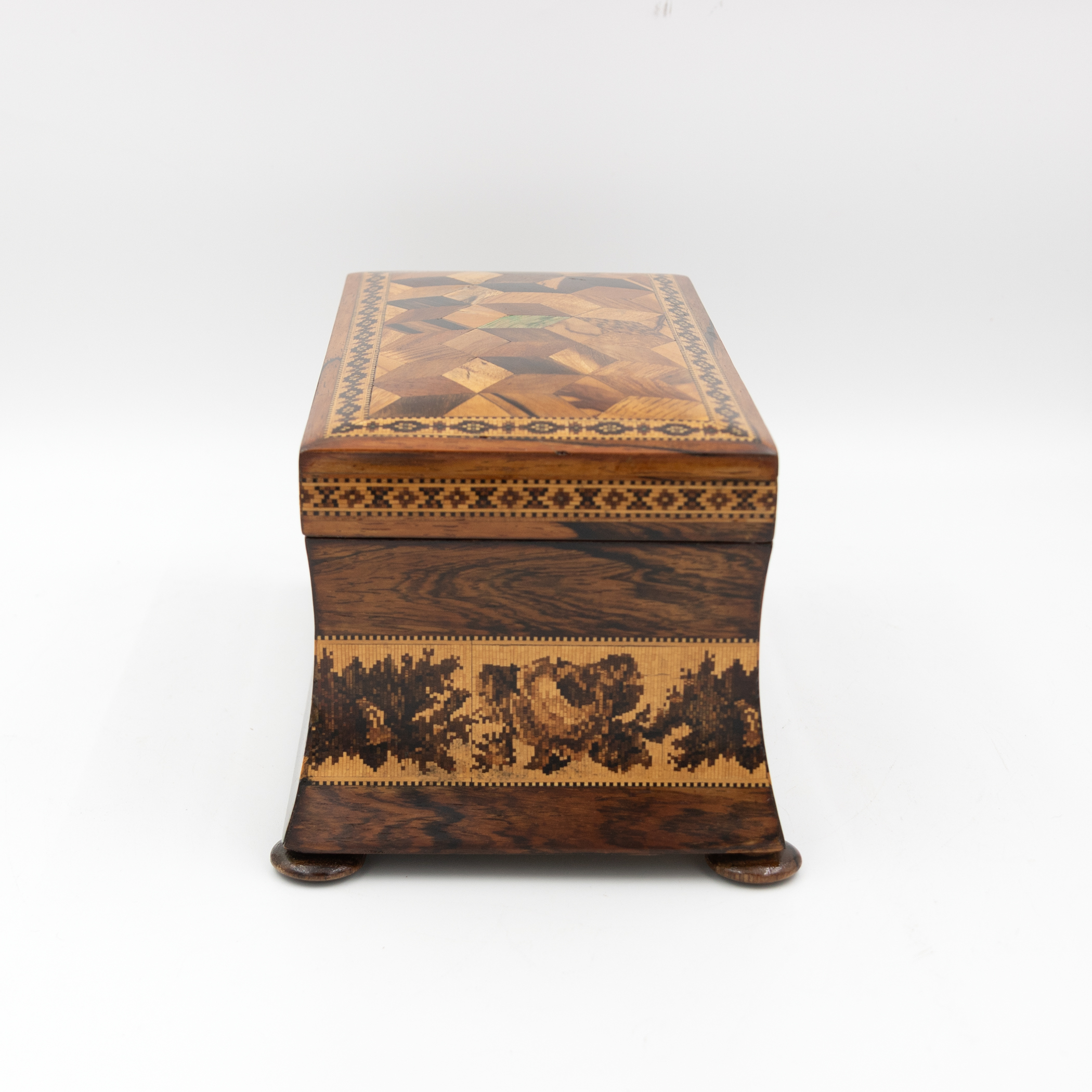
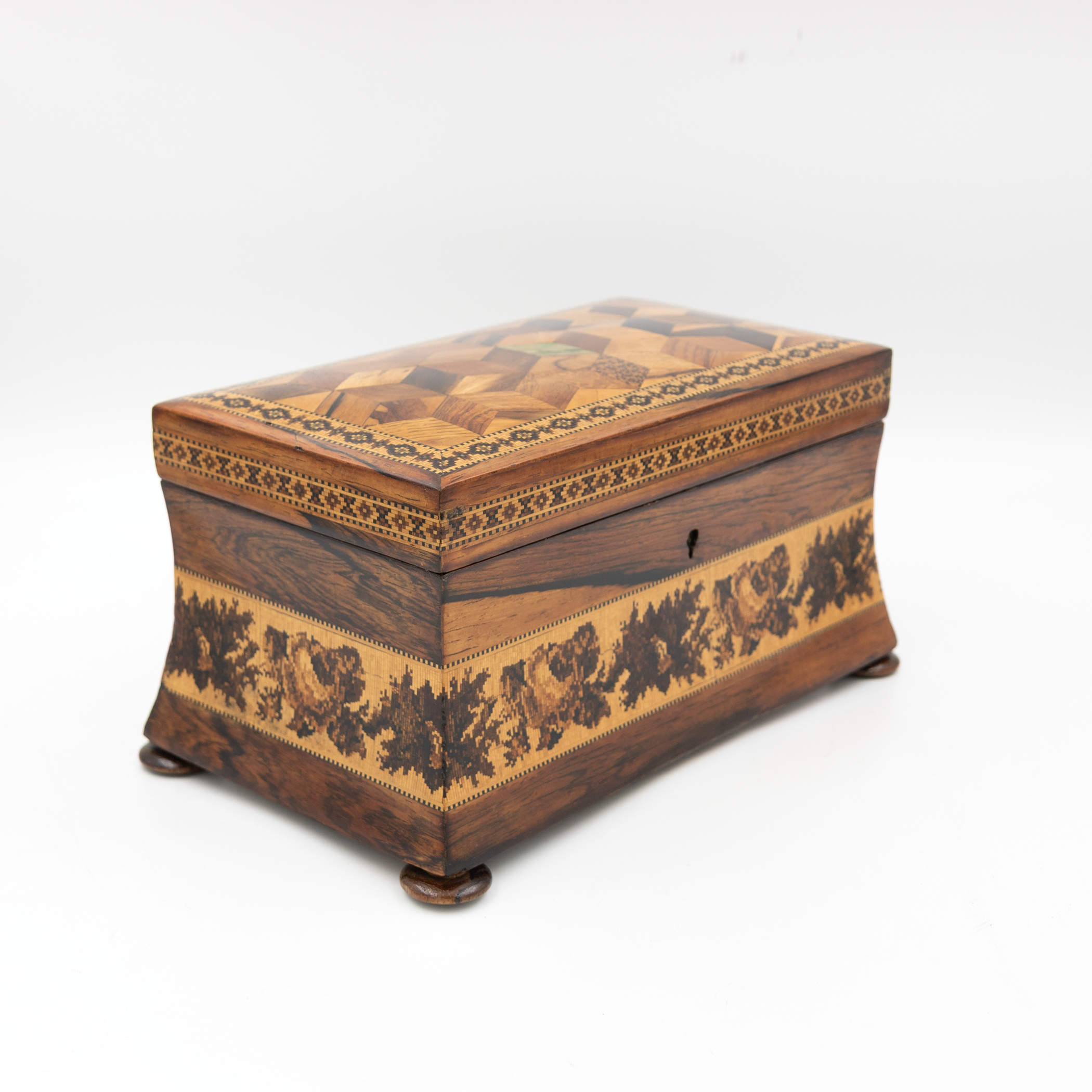
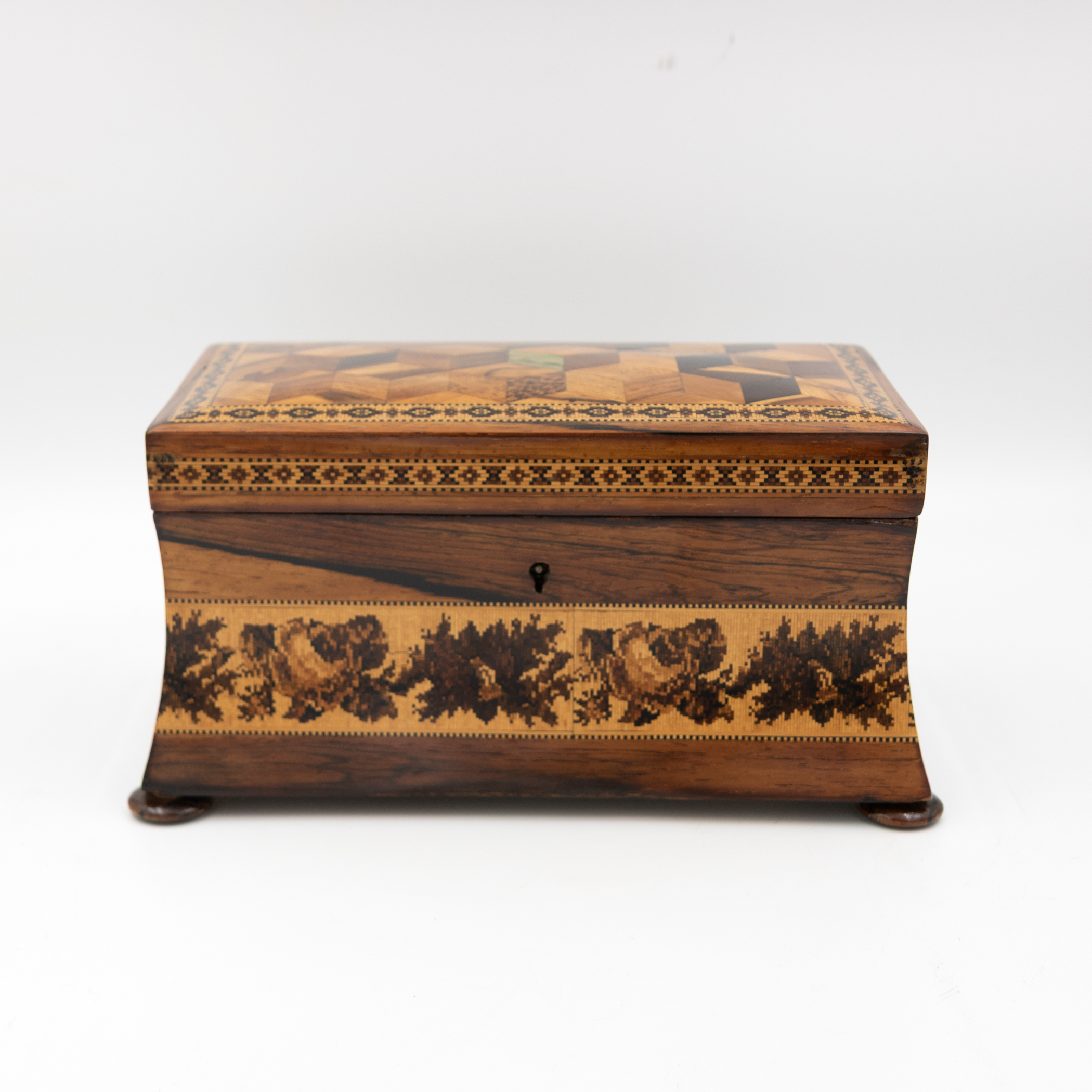
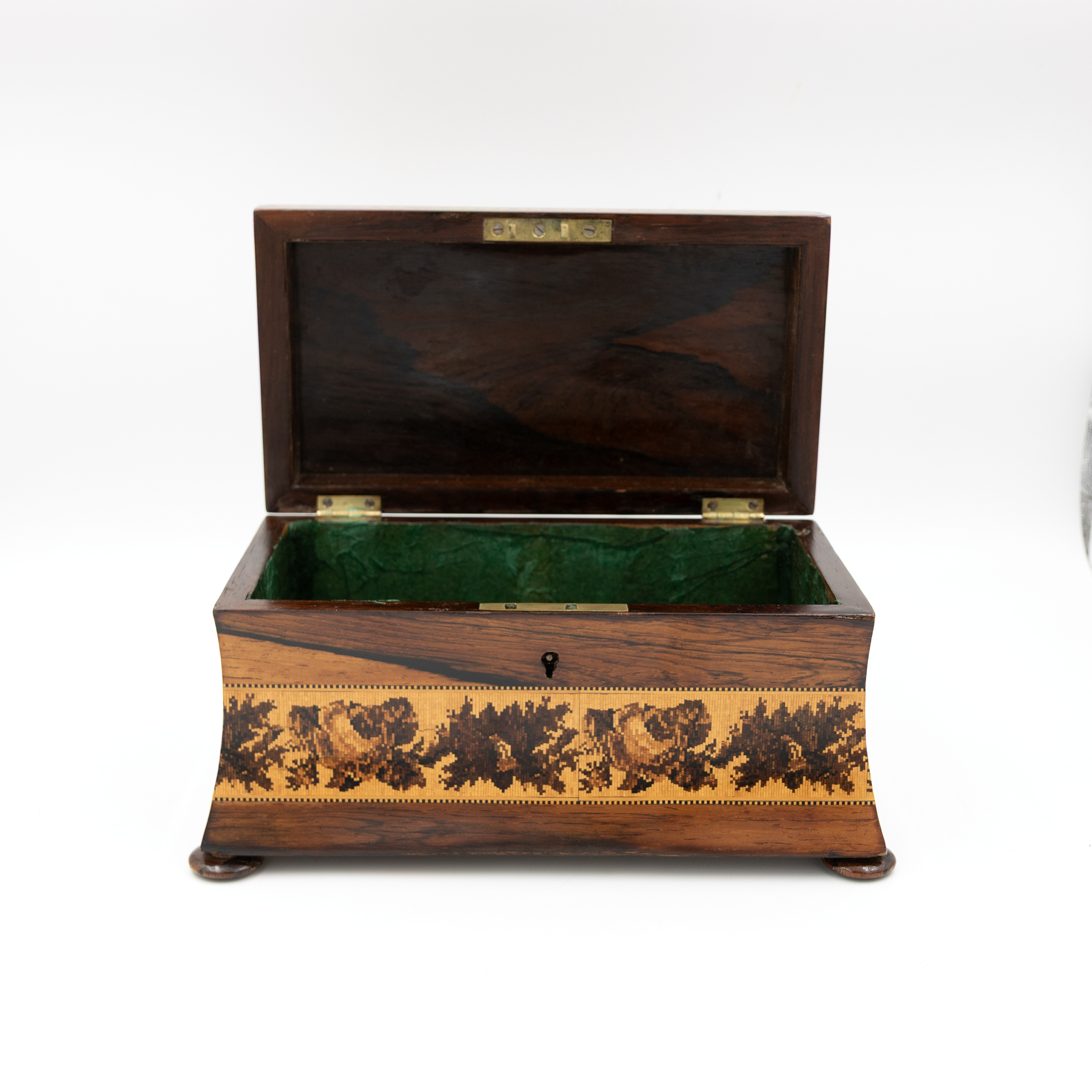
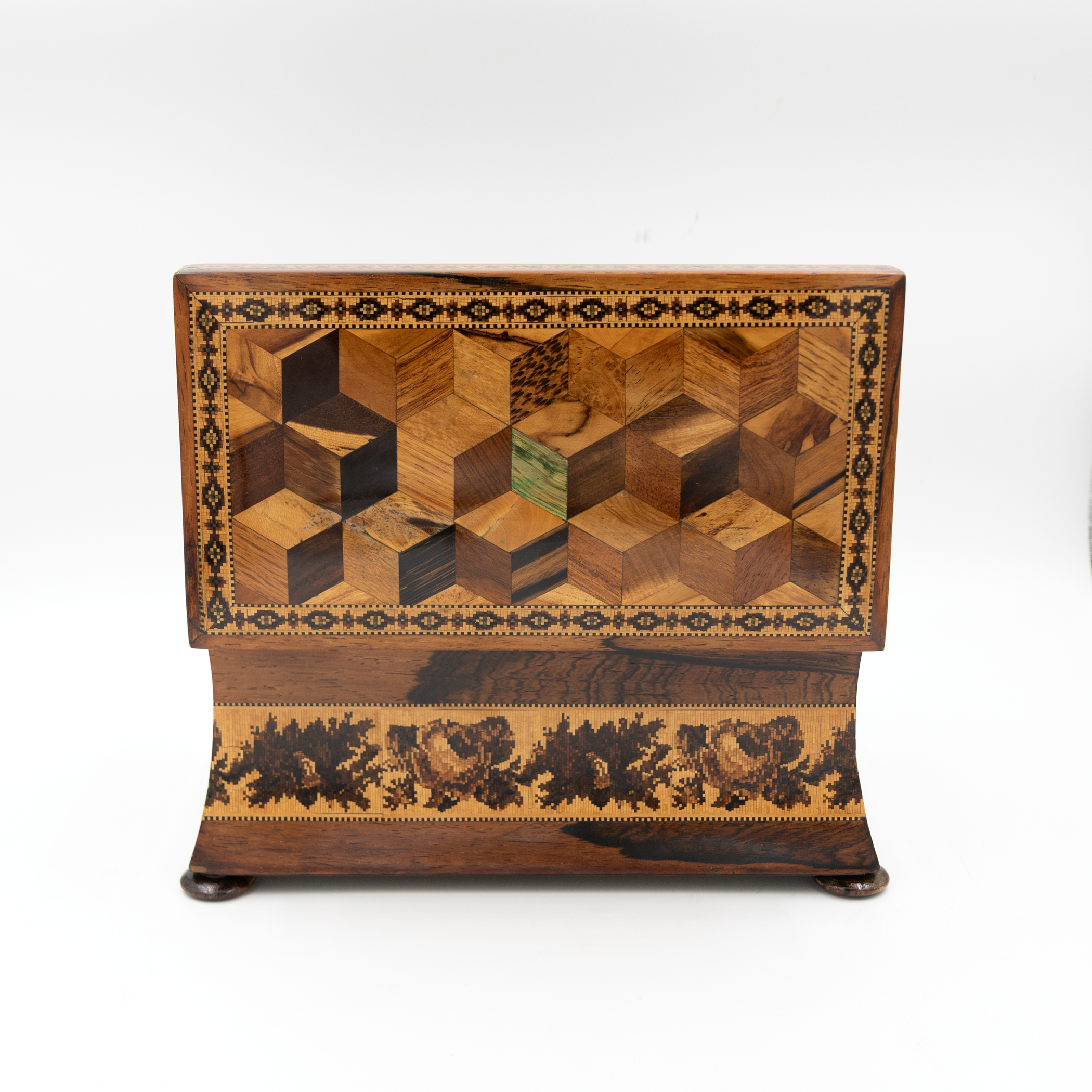
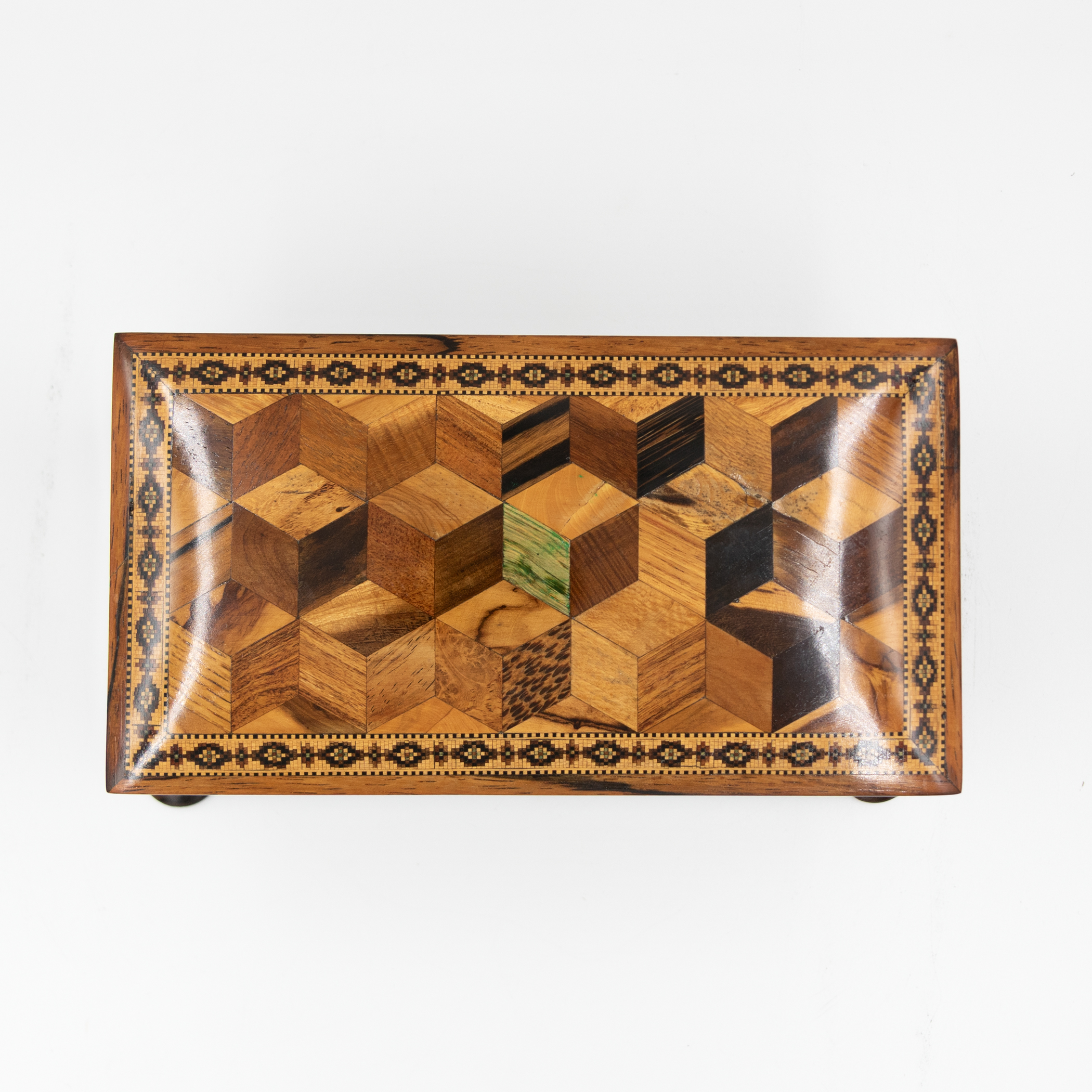
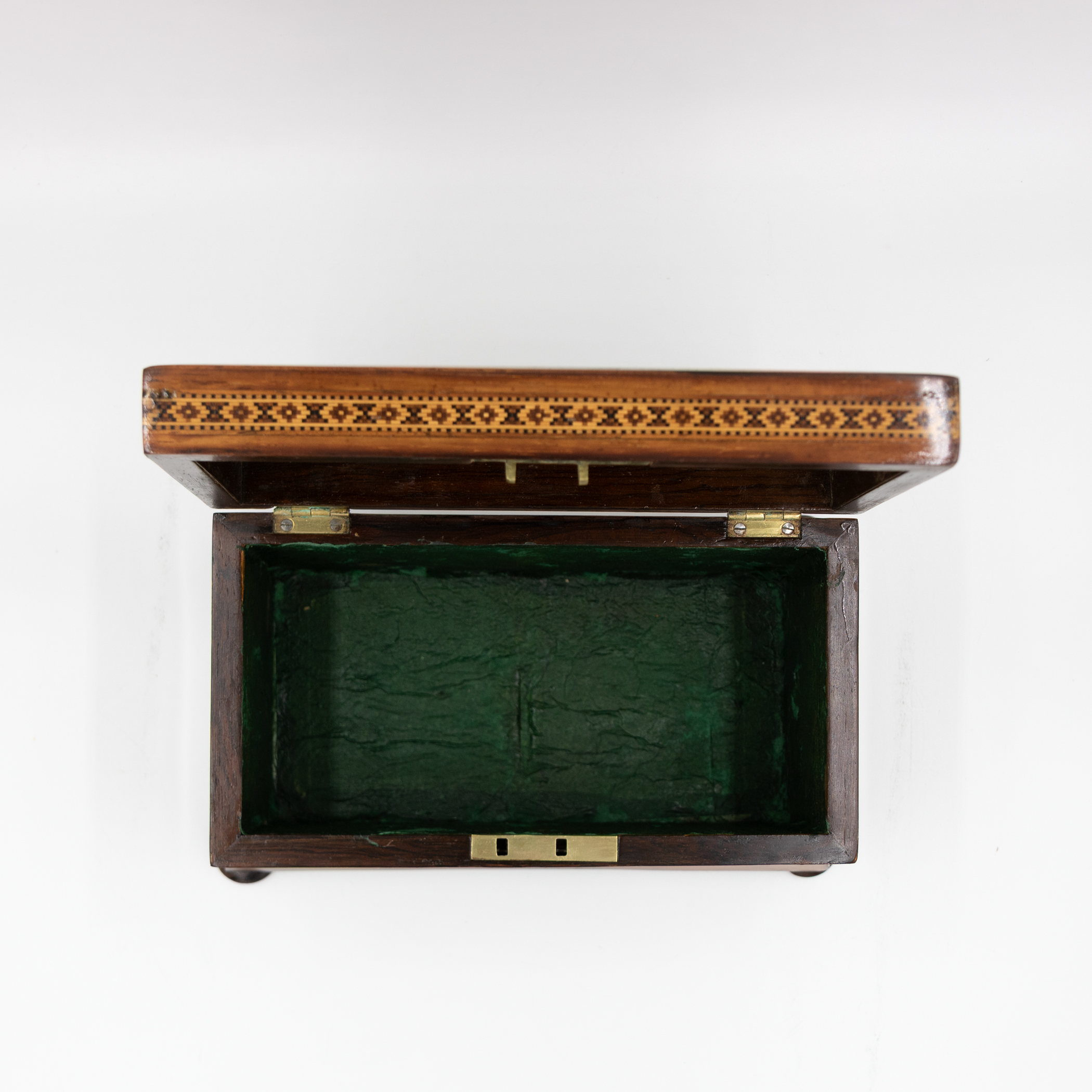
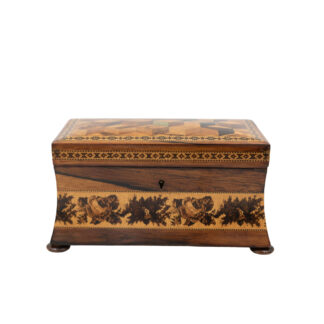
A concave-sided Tunbridge Ware1 box with a domed lid inlaid with a tumbling-block mosaic. The sides are set with continuous geometric micro-mosaic bands above and below the concave mid-section. Contrasting reserves frame each façade, the veneers laid with precision typical of mid-century Tunbridge work. The interior is papered; the inner face of the lid is lined with coromandel. Working lock and key. The underside retains its original paper lining, and the box stands on four compressed rosewood bun feet. English circa 1850.
Height: 5 in. (13 cm.)
Width: 9.5 in. (24 cm.)
Depth: 6 in. (15 cm.)
Further readings and sources:
- Tunbridge Ware refers to a regional marquetry tradition centered in Tunbridge Wells and Tonbridge in Kent during the late 18th to late 19th centuries. Artisans produced micro-mosaic inlays by assembling colored wood rods into patterned blocks, slicing them into thin veneers, and applying these sheets to boxes and small decorative objects. Common motifs included geometric tessellations, floral panels, and perspectival “tumbling-block” patterns. Major workshops included those of Henry Hollamby, Edmund Nye, and Thomas Barton. Examples are held in the Victoria & Albert Museum and the Tunbridge Wells Museum collections. ↩
Reviews
There are no reviews yet.